Search hero banner

Search results

Showing 441 - 460 of 540 results

Cryogenic Permanent Magnet Undulator (CPMU) source for the BRIGHT Nanoprobe beamline

Nanoprobe beamline (NANO) - under construction

The BRIGHT Nanoprobe beamline provides a unique facility capable of spectroscopic and full-field imaging. NANO will undertake high-resolution elemental mapping and ptychographic coherent diffraction imaging. Elemental mapping and XANES studies (after DCM upgrade) will be possible at sub-100 nm resolution, with structural features able to be studied down to 15 nm using ptychography.

Micro-Computed Tomography beamline (MCT)

Micro-Computed Tomography beamline (MCT)

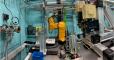
With enhanced submicron spatial resolution, speed and contrast, the Micro-Computed Tomography beamline opens a window on the micron-scale 3D structure of a wide range of samples relevant to many areas of science including life sciences, materials engineering, anthropology, palaeontology and geology. MCT will be able to undertake high-speed and high-throughput studies, as well as provide a range of phase-contrast imaging modalities.

Molecular scaffold

Experiments at the Synchrotron enable researchers to produce a 3D structure of a molecular scaffold with role in cancer

Principal Scientist – X-ray Fluorescence Microscopy

Principal Scientist – X-ray Fluorescence Microscopy

The characterisation of planetary materials

The characterisation of planetary materials

ANSTO provides a range of capabilities using neutrons, X-rays and infrared radiation to study the solids, liquids and gases that might be found in materials in our solar system and beyond.

hills on Mars

The characterisation of planetary materials

ANSTO provides a range of capabilities using neutrons, X-rays and infrared radiation to study the solids, liquids and gases that might be found in materials in our solar system and beyond.

Staff Profile Image
Project Manager for Computing and Electronics
Dr Nick Hauser received his PhD in Physics from the University of Technology Sydney in 1994.

Pagination