


Showing 441 - 460 of 1705 results

Eureka Prizes 2025
Deuterated ionic liquids

Superconducting calcium-injected graphene
Since the discovery of superconducting Caintercalated graphite (CaC6) the intercalation of epitaxial graphene on SiC(0001) with Ca has been studied extensively in order to achieve superconductivity.
How safe is OPAL?
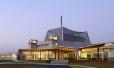
The OPAL research reactor's design and integrated safety features mean it is extremely safe; a fact confirmed by independent analysis.
Miriad profile - nandin member
Hear from our most recent addition to the nandin Innovation Centre, Tomonori Hu, Founder and CEO of Miriad.
Understanding the full impact of radiation on astronauts
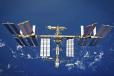
In space, without the protection of the magnetosphere, the type and dose of radiation is considerably different to what is naturally experienced on earth. However, it is the secondary particles of lower energies created when galactic and cosmic radiation interacts with shielding that is of concern for astronauts.
Understanding the full impact of radiation on astronauts
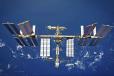
In collaboration with the French National Institute of Health and Medical Research (INSERM) and the French International Space Agency (CNES), ANSTO scientists are undertaking research on the radiobiological effects of secondary particles that are created when radiation interacts with the shielding on the International Space Station.
Women's fertility linked to detox element selenium in diet
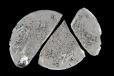
The impact of boron on glass surface properties
Within the bulk structure of such glasses, boron is known to be a key actor, as it exhibits intriguing and composition-dependent changes in coordination state that often drive properties.

Project Members - Magnetism
Project members of Magnetism.
New advanced material shows extraordinary stability over wide temperature range
Researchers from UNSW have found an extraordinary material that does expand or contract over an extremely wide temperature range and may be one of the most stable materials known.
Breakthrough on virus infecting rare and endangered parrots

OPAL multi-purpose reactor
Australia’s Open Pool Australian Lightwater (OPAL) reactor is a state-of-the-art 20 megawatt multi-purpose reactor that uses low enriched uranium (LEU) fuel to achieve a range of activities to benefit human health, enable research to support a more sustainable environment and provide innovative solutions for industry.

What we do
ANSTO leverages great science to deliver big outcomes. We partner with scientists and engineers and apply new technologies to provide real-world benefits. Our work improves human health, saves lives, builds our industries and protects the environment.
Progress on low energy electronics
Soft X-ray experiments used to characterise new thin film topological Dirac Semimetal.
70 years of scientific excellence has brought significant benefits to Australia
ANSTO is a unique national science organisation that began operating under its predecessor The Australian Atomic Energy Commission (AAEC) 70 years ago.
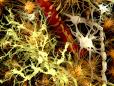
Understanding disease - Causation and progression
This program uses ANSTO’s nuclear capabilities to identify, quantify, and monitor the mechanisms which cause, or influence the development and progression of chronic diseases.
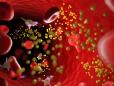
Deuterated Plasmalogens: A New Class of Labelled Lipids from the NDF

User Meeting 2020 Invited Speakers
The User Advisory Committee (UAC) are pleased to present this year's invited speakers.