
Benefits of nuclear science
ANSTO uses nuclear research techniques to address many of the important issues of our time relating to the environment, human health and industry.


Showing 441 - 460 of 1063 results
ANSTO uses nuclear research techniques to address many of the important issues of our time relating to the environment, human health and industry.
Dingo sees through heavy corrosion to help dentify an historic firearm.

Sample environments and Data analysis
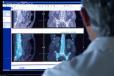
Nuclear medicine uses radiation to provide information about the functioning of a person's specific organs to diagnose or treat disease.
For three unknown medical radionuclides, students will graph their decay over time, use the graph to calculate their half-life, and determine the identify and use of each radionuclide using background information provided.

New high energy ion microprobe beamline supports space research on the effects of radiation on astronauts.
A site for the National Radioactive Waste Management Facility has been acquired, with the new facility to be built near the town of Kimba on the South Australian Eyre Peninsula.
Moving earth in the search for dark matter: laboratory construction underway at mine site.
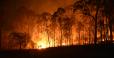
Bushfires heat soil to extreme temperatures and this causes oxidation of chromium to a highly toxic and carcinogenic form.
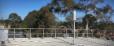
ANSTO continually monitors environmental gamma radiation from a station located in Engadine NSW. ANSTO uses environmental radiation data to evaluate atmospheric dispersion from its site. This radiation is almost completely natural background radiation.

The design and implementation of alternative energy sources is one of the greatest scientific and social challenges of our time.
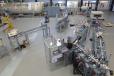
The 6MV tandem accelerator, named SIRIUS, is instrumented with a wide range of AMS, IBA and ion irradiation facilities. The three ion sources include hydrogen and helium sources, and a MC-SNICS sputter source for solid materials.