

Showing 461 - 480 of 547 results

Graduate Program
ANSTO's Graduate Program develops the next generation of Australian business and science leaders, by providing the best and brightest postgraduate students with a two-year rotation cycle, tailored to match your talents, goals and interests.
Evaluating diets of farmed Pacific Oysters

Scientist - XAS
Role at ANSTO

Radiochemist
Role at ANSTO

Principal Scientist – X-ray Fluorescence Microscopy
Principal Scientist – X-ray Fluorescence Microscopy

Physicist/ Instrument Scientist
Role at ANSTO
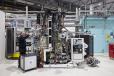
Soft x-ray spectroscopy
Soft x-rays are generally understood to be x-rays in the energy range 100-3,000 eV. They have insufficient energy to penetrate the beryllium window of a hard x-ray beamline but have energies higher than that of extreme ultraviolet light.

The evolution of molten salt reactors
Molten Salt Reactors (MSRs) are nuclear reactors that use a fluid fuel in the form of very hot fluoride or chloride salt rather than the solid fuel used in most reactors. Since the fuel salt is liquid, it can be both the fuel to produce heat and the coolant to transport the heat to a power plant.
Historic pewter plate reveals secrets
Technique provides insights into historic maritime artefact linked to early exploration of Australia.
New partnership
Australia and Sri Lanks signs new partnership to fight chronic kidney disease.

Research Support/Fieldwork Officer
Role at ANSTO
Evaluating the impact of nanomaterials on health and the environment
ANSTO has put together a robust multidisciplinary approach to understanding the impacts of nanomaterials, investigating a common food additive, E171 titanium dioxide, used primarily as a colouring agent in everyday foods.
New advanced material shows extraordinary stability over wide temperature range
Researchers from UNSW have found an extraordinary material that does expand or contract over an extremely wide temperature range and may be one of the most stable materials known.

Atmospheric Scientist
Role at ANSTO
Simulating phase transformations during the welding of ferritic steels
Progress on BRIGHT Project beamlines
The complex engineering of scientific instruments is explored in this 'behind the scenes' look at the installation of frontends for two new beamlines at the Australian Synchrotron.
Understanding corrosion in concrete sewer pipes
Using neutron imaging techniques at ANSTO, researchers from Macquarie University have gained a better understanding of how corrosion forms and spreads through concrete that is commonly used in sewer pipes.
ITRAX scanning on cores from Macquarie Island
Research reveals that strong westerly winds weaken the Southern Ocean’s ability to store carbon and thereby contribute to faster accumulation of carbon dioxide in the atmosphere
Australia supports Fiji-led IAEA RCA project to strengthen food security
Australia is supporting a new regional initiative led by Fiji in partnership with the International Atomic Energy Agency (IAEA) under the Regional Cooperative Agreement for Research, Development and Training Related to Nuclear Science and Technology for Asia and the Pacific (RCA) to strengthen food security across Asia and the Pacific using nuclear science and technology.