

Showing 461 - 480 of 1603 results
ANSTO welcomes $13.9M critical minerals funding
Rare earth elements will be a key area of focus for the Australian Nuclear Science and Technology Organisation’s Minerals unit as it welcomes a $13.9 million funding allocation under the Australian Critical Minerals Research and Development Hub
ANSTO part of new network to transform Australia into world-leading space centre
ANSTO is a partner on the National Space Qualification Network (NSQN) led by the Australian National University (ANU) that will transform Australia into a world-leading space centre by enhancing facilities to test payloads, components, and hardware prior to their use in harsh environments of space.
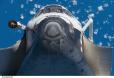
Materials in extreme environments
Materials researchers focus on development, performance and in-service degradation of nickel-based superalloys, reinforced carbon-Carbon (C/C) composites, and ultra-high temperature ceramics (UHTC).
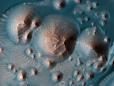
The characterisation of planetary materials
ANSTO provides a range of capabilities using neutrons, X-rays and infrared radiation to study the solids, liquids and gases that might be found in materials in our solar system and beyond.
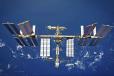
Understanding the full impact of radiation on astronauts
In collaboration with the French National Institute of Health and Medical Research (INSERM) and the French International Space Agency (CNES), ANSTO scientists are undertaking research on the radiobiological effects of secondary particles that are created when radiation interacts with the shielding on the International Space Station.
Agriculture study on zinc nanofertilsers
Nuclear techniques used in investigation of a new class of micro and nanoscale zinc fertilisers.

Travel Funding
ANSTO may provide travel and accommodation support to successful grant applicants from AINSE member organisations. Travel funds granted are to be used solely to cover the majority of the cost to travel to Sydney.
Cosmetic chemistry
Deuteration and nuclear techniques can contribute to the science of beauty.

Animal Ethics Approval - Australian Synchrotron
Guidance for obtaining and maintaining human or animal ethics approval at the Australian Synchrotron.
Stopping yellow spot fungus that attacks wheat crops
Collaborators used X-ray imaging to understand the fine detail of how a damaging fungal pathogen reduces leaf function and grain yield of wheat crops.
Gamma radiation imaging technology
A new imaging technology developed at ANSTO makes it possible to image, identify and locate gamma-ray radiation in a safe and timely manner.
Ion beam analysis techniques
When an energetic ion beam hits a sample it will interact with the atoms through a number of very complex interactions. By detecting and measuring the reaction products resulting from the various interactions and their intensities, you can obtain quantitative data on the sample's constituent elements and their spatial distribution.
Actinide and heavy ion isotopic analysis
ANSTO has the capability to analyse heavy isotopes such as 129I, platinum group elements, 236U and Pu isotopes.

Radiation measurement
ANSTO maintains national capabilities in radionuclide metrology, the measurement and detection of ionising radiation, radioanalytical chemistry and nuclear forensics to support industry, government and scientific users.
ANSTO's contribution to the advancement of molten salt based reactor systems
ANSTO, as the Australian centre for nuclear-related research and as the custodian of large research infrastructure is well-positioned to undertake research on molten sale based reactor systems using its capabilities and expertise.
Fossils go nuclear
The 2025 ANSTO Australian Synchrotron Stephen Wilkins Medal
ANSTO is seeking nominations for the ANSTO Australian Synchrotron Stephen Wilkins Thesis Medal.
Big Ideas
ANSTO Big Ideas encourages students to creatively communicate the work of an Australian scientist, and explain how their work has inspired them to come up with a Big Idea to make our world a better place. This competition is intended to engage and support Australian students in years 7-10 in Science and encourage them to pursue studies and careers in STEM.