
Partnerships
ANSTO works in partnerships and collaborative ventures with national and international organisations. Partner with ANSTO.


Showing 461 - 480 of 1694 results
ANSTO works in partnerships and collaborative ventures with national and international organisations. Partner with ANSTO.
Cracking the code for crop nutrition and food quality with X-ray fluorescence microscopy.
The United Uranium scholarship recognises outstanding ability and promise in the field of nuclear science and technology, specifically as it applies to nuclear energy.

The Centre for Acclerator Science operates accelerators that can be used for space radiation testing.
Research on lunar meteorite and moon crater analogues coincides with Science Week.

Discover the amazing world of nuclear science from your classroom. Join us for Meet an Expert, Nuclear Science Inquiry Skills, Junior Science, and Online Depth Study sessions for Chemistry, Physics and Investigating Science.
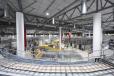

ANSTO has a range of capabilities and expertise to support aerospace and space research.
ANSTO researchers have taken up the challenge to develop a coating for the cladding used in nuclear reactors to prevent it from taking up hydrogen and releasing it if temperatures get too high and repair itself if damaged.
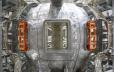
ANSTO signed a cooperation agreement with ITER to enable Australia to engage with and benefit from participation in the world’s largest engineering project to create fusion energy.
A collaboration of Australian scientists has used ANSTO’s Australian Synchrotron to measure the amount of carbon that is captured in microscopic seams of deep-sea limestone, which acts as a carbon sink.
ANSTO scientist, Dr Klaus Wilcken of the Centre for Accelerator Science, used cosmogenic nuclide dating to determine the ages of layered sand and gravel samples, in which seven footprints of the flightless bird, the moa, were found on the South Island in New Zealand in 2019.
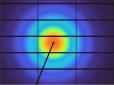
The Biological Small Angle X-ray Scattering beamline will be optimised for measuring small angle scattering of surfactants, nanoparticles, polymers, lipids, proteins and other biological macromolecules in solution. BioSAXS combines combine a state-of-the-art high-flux small angle scattering beamline with specialised in-line protein purification and preparation techniques for high-throughput protein analysis.
Research to improve knowledge of natural variability in rainfall and recharge by monitoring hydrological processes in key regions and reconstruct water recharge history.
Collaboration across the Tasman has enabled Australian and New Zealand researchers and scientists to shed light on a protein involved in diseases such as Parkinson’s disease, gastric cancer and melanoma.

Stay updated with the latest news and notifications impacting ANSTO's landmark research infrastructure in both Sydney and Melbourne.
Researchers led by the University of Bristol (UK) have identified a possible cause of SARS-CoV-2’s increased infectivity compared to SARS-CoV