First malaria-human contact mapped with Nobel Prize-winning technology
Research represents significant step towards developing vaccine


Showing 461 - 480 of 662 results
Research represents significant step towards developing vaccine
The protein mapping workhorses of the Australian Synchrotron, Macromolecular and Microfocus crystallography beamlines, MX1 and 2, continue to support important biomedical research in the development of vaccines and new therapeutics.
ANSTO is temporarily housing 12 tonnes of an important chemical for the SABRE Dark Matter Detector as part of the Dark Matter project.
Modifications to promising novel non-fullerene small molecule acceptor in organic thin film for solar cells demonstrates improved power conversion efficiency.

Research to determine the potential dose from long- lived radioactive substances at mining, legacy sites and nuclear facilities.
Commitment to undertake health research.
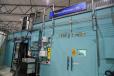
Publications and resources from the Powder Diffraction beamline.



ANSTO has a range of capabilities and expertise to support aerospace and space research.
Researchers from UNSW have found an extraordinary material that does expand or contract over an extremely wide temperature range and may be one of the most stable materials known.
First paper from Bilby investigates the effects of inorganic ions on the self-assembly of lecithin

Kathleen manages the quality and document management systems, and oversees procedures for inspection, testing, and calibration of equipment and systems, to support the accelerator operations and beam lines.

Dr. Qinfen Gu leads the Powder Diffraction beamline team at the Australian Synchrotron, ANSTO, and serves as an Honorary Principal Fellow in the Department of Chemical Engineering at the University of Melbourne.

In an effort to understand why the Tongan Hunga volcano eruption was so explosive, internationally-recognised volcanologist Prof. Shane Cronin of the University of Auckland and associates rely on beamlines at the Australian Synchrotron to support comprehensive research on the Hunga event.
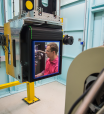
The High Performance Macromolecular Crystallography beamline will enable the study of very small (sub-5 micrometre) or weakly diffracting crystals, providing a state-of-the-art high-throughput facility for researchers. MX3 will be able to study the structures of large proteins and protein complexes for virology, drug design and industrial applications via goniometer mounted crystals, in-tray screening, or via serial crystallography methods.