Additional funding for Chronic kidney disease research
ANSTO to receive a new grant to continue to fight chronic kidney disease killer in Sri Lanka.


Showing 481 - 500 of 1507 results
ANSTO to receive a new grant to continue to fight chronic kidney disease killer in Sri Lanka.
Recognition of research that developed a life-saving pharmaceutical milkshake using synchrotron techniques.
ANSTO is participating in a major project to learn more about an important component of the atmosphere, the hydroxyl radical.
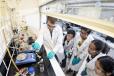
Winners of the Big Ideas Competition 2021

Australia part of global renaissance in fusion power research symbolised by ITER experiment

ANSTO has been tracking and publishing data on fine particle pollution from key sites around Australia, and internationally, for more than 20 years.
New oxygen ion conducting material for use in solid oxide fuel cells and other devices
In early February, ANSTO was honoured to host the International Atomic Energy Agency (IAEA) National Liaison Officers Meeting and Sub Regional Approach to the Pacific Islands (SAPI) Programme, which focused on the development and delivery of the IAEA Technical Cooperation Programme in the Pacific.
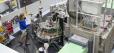
ANSTO sets out the following terms and conditions relating to users who access our facilities for the purpose of research.
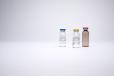

Research elucidates how in situ cosmogenic radiocarbon is produced, retained and lost in the top layer of compacting snow (the ‘firn layer’) and the shallow ice below at an ice accumulation site in Greenland.
ANSTO, Australia’s knowledge centre for nuclear science and technology, connects STEM graduates with industry to work on real-world challenges through its FutureNow Scholarships for 2022.
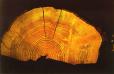
Radiocarbon dating is a well-known method for determining the age of materials up to the age of approximately 50,000 years.
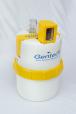
ANSTO’s nuclear medicine processing and distribution facility assembles, loads, tests and distributes a range of nuclear medicine products, including Mo-99. The Mo-99 is dispensed into an ANSTO radiopharmaceutical Gentech® Generator where it decays to Tc-99m.
Research on the mechanism of cell death has insights to bring progress on neurodegenerative diseases and plant biosecurity.