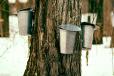
An in-situ experiment on Maple saplings
The sap extracted from Sugar Maple trees, is used to produce maple syrup. There are many conflicting theories and an absence of experimental evidence, regarding the mechanisms involved in maple sap exudation.


Showing 521 - 540 of 662 results
The sap extracted from Sugar Maple trees, is used to produce maple syrup. There are many conflicting theories and an absence of experimental evidence, regarding the mechanisms involved in maple sap exudation.

Over the last decades, neutron, photon, and ion beams have been established as an innovative and attractive investigative approach to characterise cultural-heritage materials.
ANSTO has signed a strategic agreement with the Australian National University and sets the relationship between the two organisations, who collaborate on important projects, such as the fusion energy project ITER and space research, well into the future.
ANSTO has hosted an event to launch a new Dharawal language learning resource for primary students at the nandin innovation centre.
ANSTOs capabilities are ideally suited for these investigations relating to quantum technologies.
Agreement extends Taiwan’s National Synchrotron Radiation Research Center’s operation of neutron scattering instrument at ANSTO

Physicist and cancer research Dr Mitra Safavi-Naeini, Macromolecular crystallography beamline scientist Dr Eleanor Campbell and Engineering Support Workshop Manager Bianca Shepherd have been chosen by Science and Technology Australia as the next Superstars of STEM
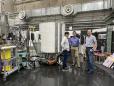
The instrument is ideally suited to study of spin and lattice dynamics, magnon and phonon dispersion relations in single crystal samples.

ANSTO is coordinating and facilitating the calling of pre-concept papers for the next cycle of technical cooperative project proposals under the Regional Cooperative Agreement for Research, Development and Training Related to Nuclear Science and Technology for Asia and the Pacific (RCA) | IAEA

Role at ANSTO
Highlighting the contribution of four inspirational ANSTO leaders on International Women's Day.


The Advanced Diffraction and Scattering beamlines (ADS-1 and ADS-2) are two independently operating, experimentally flexible beamlines that will use high-energy X-ray diffraction and imaging to characterise the structures of new materials and minerals.
Swinburne University of Technology is launching an Australian-first Aerostructures Innovation Research Hub (AIR Hub) with the support of $12 million in funding from the Victorian Government.