Quantum sensing exploits the most counterintuitive properties of quantum systems
Devices that use quantum sensors take advantage of quantum properties, unlike conventional instruments that apply classical physics in their operation.


Showing 561 - 580 of 599 results
Devices that use quantum sensors take advantage of quantum properties, unlike conventional instruments that apply classical physics in their operation.
Outstanding individuals and teams have been recognised for their outstanding work, innovation, excellence in the 2025 ANSTO Awards.
A unique scientific capability comprising a single research platform for high-fidelity simulation, real-time dosimetry, and biological response data is available all from a neutron instrument.

ANSTO's OPAL reactor is one of the world's most advanced and reliable research reactors today. To ensure we can continue operating OPAL safely and reliably and maximise utilisation, ANSTO must regularly carry out maintenance and upgrades.
Science and medical experts meet in Adelaide to discuss great potential of particle therapy in Australia
Congress marks watershed moment for nuclear medicine and ANSTO
Nuclear techniques used in investigation of a new class of micro and nanoscale zinc fertilisers.
An international team led by ANSTO has been awarded a prestigious program grant from the Foundation for Australia-Japan Studies.
There have been significant developments in small modular reactor technologies in 2022. The International Atomic Energy Agency expects small modular reactors (SMRs) to make an important contribution to achieving global climate goals and energy supply security. But with more than 70 SMR designs under development in 18 countries – including innovative reactors that are yet to be licensed and novel methods of modular manufacturing that are new to the nuclear industry – widely deploying SMRs in time remains a tall task.
INVAP, the Argentinian advanced nuclear technology company, who designed and constructed the Open Pool Lightwater Reactor (OPAL) for ANSTO to replace the HIFAR reactor is celebrating 50 years of operations with the visit of a group of INVAP executives to ANSTO to celebrate their achievements and discuss future collaborations.
One of ANSTO’s most accomplished scientists and internationally recognised energy researchers, Prof Vanessa Peterson, has been awarded the Nancy Millis Medal for Woman in Science by the Australian Academy of Science this week.

The Minerals consultancy group at ANSTO has expertise in chemical engineering, metallurgy, mineralogy, chemistry, geology, and radiation safety. We can support our client's project by providing process development services, technical review, and research.
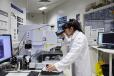
The Infrared Microspectroscopy beamline combines the high brilliance and collimation of the synchrotron beam through a Bruker V80v Fourier Transform Infrared (FTIR) spectrometer and into a Hyperion 3000 IR microscope to reach high signal-to-noise ratios at diffraction limited spatial resolutions between 3-8 μm.
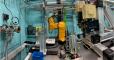
With enhanced submicron spatial resolution, speed and contrast, the Micro-Computed Tomography beamline opens a window on the micron-scale 3D structure of a wide range of samples relevant to many areas of science including life sciences, materials engineering, anthropology, palaeontology and geology. MCT will be able to undertake high-speed and high-throughput studies, as well as provide a range of phase-contrast imaging modalities.
Dr Rezwanul Haque, now a senior lecturer at the University of the Sunshine Coast, received a national Young Scientist Award for his earlier research using nuclear techniques at ANSTO’s Australian Centre for Neutron Scattering to find cracks and signs of stress in riveted joints in sheet metal in car bodies.