Study confirms fraudulent Kakadu plum product is in the international marketplace jeopardising authentic Indigenous products
Research confirms that fraudulent Kakadu plum extracts are in circulation online and in the international marketplace.


Showing 581 - 600 of 1024 results
Research confirms that fraudulent Kakadu plum extracts are in circulation online and in the international marketplace.

ANSTO's unique capabilities are being used to develop a quick analytical tool to determine the geographic origin of seafood and authenticates quality.
Earlier this month, ANSTO welcomed a delegation of Elders from the Willandra Lakes Region World Heritage site to its Lucas Heights campus. The visit marked a significant collaboration between Traditional Custodians and scientists working to uncover the environmental history of Lake Mungo.

Creating a safe, inclusive and respectful online community for all.
Researchers from UNSW have found an extraordinary material that does expand or contract over an extremely wide temperature range and may be one of the most stable materials known.

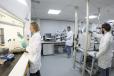
Publications by ANSTO's National Deuteration Facility.

Detailed data on ANSTO electricity use and CO2 emissions for FY2024 - FY2025
ANSTO shares expertise on food authenticity research using nuclear techniques with Southeast Asia stakeholders.

Technical information on the Far Infrared beamline at the Australian Synchrotron.
Two ANSTO scientists were part of a research team led by the University of Wollongong, who are finalists for the 2019 NSW Environment, Energy and Science (DPIE) Eureka Prize for Environmental Research.
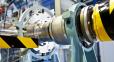
Elastic Recoil Detection Analysis (ERDA) is used principally as a method for measuring hydrogen in thin layers, and in the near-surface region of materials.
Participants undertook IAEA training hosted by Macquarie University and ANSTO on use of radionuclides for soil and water investigations.
Imaging protocol assesses molecular mechanism of work in the treatment of deadly childhood cancer neuroblastoma.
Grant supports development of handheld technology to verify origin of seafood.
A revised model has been developed that can more accurately predict the actual service life of an industrial component.
In a world-first study, Australian environmental scientists have used cave stalagmites as a record of groundwater replenishment over time, that showed the current level of rainfall recharging groundwater in southwest WA is at its lowest for at least the last 800 years.
A number of sophisticated non-invasive nuclear and accelerator techniques were used to provide information about the origin and age of an Australian Aboriginal knife held in the collection of the Powerhouse Museum.
Environmental scientists at ANSTO have been undertaking research to gain a better understanding of the potential impact of contaminants on decommissioned offshore oil and gas infrastructure since 2017