

Showing 61 - 80 of 618 results
Cosmogenic field trip in the Top End

Principal Research Scientist, Isotope Hydrology
Role at ANSTO
Data Analysis
Below lists some useful programs for data reduction, search matching, analysis and structure visualisation of diffraction data.
Insights into Titan’s atmosphere
Terahertz/Far Infrared beamlines assisted investigation into possible composition of lower atmosphere of Saturn's moon Titan.
RemLife software helps power stations improve efficiency of operations
Innovative software tool developed at ANSTO used at power stations to help maintain plant components and improve the efficiency of operations.

Visiting Australia

Visiting Australia - ANSTO-HZB Neutron Training Course 2024
One zoo, two nuclear scientists, and 30 schools: Welcome to World Environment Day

Manipulating a Thermosalient Crystal Using Selective Deuteration

2023 Eureka Prize winners announced
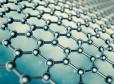
Scalable graphene growth on a semiconductor
The growth and incorporation of graphene into semiconductor device architectures has been limited by challenges related to the quality, reproducibility, and high process temperatures required to grow it on suitable substrates.
Archive
See details of previously published customer updates from our Health products team.

Procurement Policy
ANSTO's procurement policy is closely aligned with the Commonwealth Procurement Guidelines and makes use of the Australian National Audit Office guidelines on ethics, accountability and transparency.
Platypus - Neutron Reflectometer
The Platypus instrument can be used to study all-manner of surface-science and interface problems, particularly related to magnetic recording materials and for polymer coatings, biosensors and artificial biological membranes.

Commercial Technical Consultant
Role at ANSTO

Senior Scientist - MX
Dr Santosh Panjikar is a beamline scientist at the MX beamlines of the ANSTO, Australian Synchrotron. A large part of his scientific role involves assisting scientists from the crystallography user commun
New technique to improve global climate models
An investigation that set out to resolve some of the uncertainty in the sources and quantities of pollutants reaching Antarctica has produced a new experimental technique to identify and characterise recently terrestrially-influenced air reaching Antarctica.
Materials Engineer – Radiation Damage
Role at ANSTO
Using the power of artificial intelligence to help detect disease
An international collaboration led by The University of Sydney and supported by ANSTO has developed an advanced, innovative artificial intelligence application that could be used to help examine tissue samples and identify signs of disease/