Energy use and emissions
Detailed data on ANSTO electricity use and CO2 emissions for FY2024 - FY2025


Showing 61 - 80 of 95 results
Detailed data on ANSTO electricity use and CO2 emissions for FY2024 - FY2025
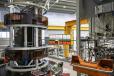
This state-of-the-art metastable-exchange optical-pumping helium-3 polarising system enables polarisation-analysis experiments on five of our existing instruments.
Researchers and industry partners from UNSW Australia, the Australian Centre for Nanomedicine, Children’s Cancer Institute and Inventia Life Sciences Pty Ltd have been awarded the 2021 ANSTO Eureka Prize for Innovative Use of Technology for their method to rapidly-produce 3D cell structures



ANSTO provides a summary of water usage and discharge for FY2024 - FY2025

Australian Nuclear Science and Technology Organisation (ANSTO) is committed to protecting your personal information in accordance with the Privacy Act 1988 (Cth) (Privacy Act) and the Australian Privacy Principles.
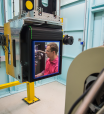
The High Performance Macromolecular Crystallography beamline will enable the study of very small (sub-5 micrometre) or weakly diffracting crystals, providing a state-of-the-art high-throughput facility for researchers. MX3 will be able to study the structures of large proteins and protein complexes for virology, drug design and industrial applications via goniometer mounted crystals, in-tray screening, or via serial crystallography methods.
Study shows for the first time that vegetation in the Windmill Islands, East Antarctica is changing rapidly in response to a drying climate.
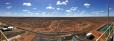
The Minerals consultancy group at ANSTO has expertise in chemical engineering, metallurgy, mineralogy, chemistry, geology, and radiation safety. We can support our client's project by providing process development services, technical review, and research.

A large group of ANSTO environmental scientists and collaborators have produced the first groundwater stable isotopes, ‘isoscapes’, intuitive maps with grid data, across NSW combining new and pre-existing isotope measurements.

Applications are currently open for the 2024 Scholarship AINSE ANSTO French Embassies (SAAFE) Research Internship Program. The SAAFE Program supports early career researchers at PhD and Postdoctoral level to expand research and innovation activities within Human Health, the Environment and the Nuclear Fuel Cycle, to initiate sustainable research networks and linkages to support Australia, New Zealand and France research and innovation.


Role at ANSTO
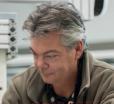
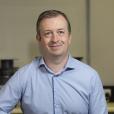
Dr David Boardman is the Chief Technology Officer & Principal Scientist for Detection & Imaging.