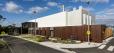
Mo-99 Manufacturing Facility
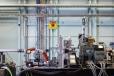
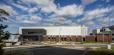
ANSTO's Mo-99 manufacturing facility secures Australia’s ability to produce Mo-99 to meet current and future domestic demand and provide a significant proportion to support global demand.
Showing 61 - 80 of 141 results
ANSTO's Mo-99 manufacturing facility secures Australia’s ability to produce Mo-99 to meet current and future domestic demand and provide a significant proportion to support global demand.
New class of conducting materials found for potential use in next generation fuel cells and other applications.

Proposals at the Australian Centre for Neutron Scattering and National Deuteration Facility.
ANSTO Big Ideas encourages students to creatively communicate the work of an Australian scientist, and explain how their work has inspired them to come up with a Big Idea to make our world a better place. This competition is intended to engage and support Australian students in years 7-10 in Science and encourage them to pursue studies and careers in STEM.
Australian Nuclear Science and Technology Organisation (ANSTO) is committed to protecting your personal information in accordance with the Privacy Act 1988 (Cth) (Privacy Act) and the Australian Privacy Principles.
The Medium Energy- X-ray Absorption Spectroscopy beamlines provides access to XANES and EXAFS data from a bending magnet source, optimised for cutting-edge applications in biological, agricultural and environmental science in an energy range that is not currently available at the Australia Synchrotron.
This month ANSTO is opening its doors to 11 talented young people from across Australia as the two-year Graduate Program kickstarts.
The Biological Small Angle X-ray Scattering beamline will be optimised for measuring small angle scattering of surfactants, nanoparticles, polymers, lipids, proteins and other biological macromolecules in solution. BioSAXS combines combine a state-of-the-art high-flux small angle scattering beamline with specialised in-line protein purification and preparation techniques for high-throughput protein analysis.
On the 10th of October 2025, the Minister for Industry, Science and Technology provided his Statement of Expectations to ANSTO.
ANSTO hosted an international meeting of Expert and Policy group members for Generation IV Forum (GIF).
In space, without the protection of the magnetosphere, the type and dose of radiation is considerably different to what is naturally experienced on earth. However, it is the secondary particles of lower energies created when galactic and cosmic radiation interacts with shielding that is of concern for astronauts.
In collaboration with the French National Institute of Health and Medical Research (INSERM) and the French International Space Agency (CNES), ANSTO scientists are undertaking research on the radiobiological effects of secondary particles that are created when radiation interacts with the shielding on the International Space Station.
ANSTO User Meeting 2021 - Speakers
Industrial Engagement Manager at ANSTO and Professor in Advanced Structural Materials at the University of Sydney, Anna Paradowska is among the authors who contributed to a 2019 paper that was recently awarded the ASM International ASM Henry Marion Howe Medal in Metallurgical and Materials Transactions A.
This scholarship recognises outstanding ability and promise in the field of nuclear science and technology, specifically as it applies to nuclear energy. Successful applicants will demonstrate a history of interest in nuclear energy and a desire to continue this interest.
The Advanced Diffraction and Scattering beamlines (ADS-1 and ADS-2) are two independently operating, experimentally flexible beamlines that will use high-energy X-ray diffraction and imaging to characterise the structures of new materials and minerals.
This joint initiative at ANSTO has developed a new capability: solid surface radiolabelling to evaluate Auger emitting sources for next-generation targeted therapy.