
Reducing cadmium in cocoa
New international limits on the cadmium content of cacao products have spurred research to discover how cadmium accumulates in cacao beans, and the effects of processing.


Showing 621 - 640 of 753 results
New international limits on the cadmium content of cacao products have spurred research to discover how cadmium accumulates in cacao beans, and the effects of processing.

The Planetary Materials theme at ANSTO is co-ordinated by Helen Maynard-Casely and Helen Brand.

Research team for the Aerosol sampling program
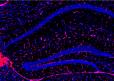
Research is undertaken to characterise and optimise the beneficial impacts of radiation on living matter

What’s it like being a graduate at ANSTO? Read these profiles featuring some of our many graduates and scholarship recipients.

Through the development and application of a robust safety management system, ANSTO strives to ensure that risks are as low as possible.
ANSTO researchers are undertaking the fabrication and characterising advanced fuels and investigating the key properties of nuclear waste and its long-term interaction with containment materials to improve safety for short and long-term storage.
Irradiation is the process by which an object is exposed to radiation. Irradiation can be useful for many industry applications.
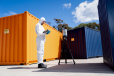
It is critical across many industries to identify and locate sources of radiation accurately and quickly. By accurately imaging radiation across the full energy range, CORIS360™ improves operational decision making across many industry settings.
ANSTO’s Dr Joanne Lackenby and Dr Katie Sizeland have been selected 2018 Superstars of STEM as some of Australia’s most inspiring scientists, technologists and educators.


ANSTO offers a range of specialist capabilities in the area of food and food production that provide insights other approaches cannot.
The Advanced Diffraction and Scattering beamlines (ADS-1 and ADS-2) are two independently operating, experimentally flexible beamlines that will use high-energy X-ray diffraction and imaging to characterise the structures of new materials and minerals.
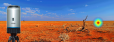
A tiny 8mm by 6mm radioactive capsule went missing in January 2023, somewhere along a 1400 kilometre journey from Rio Tinto’s Gudai-Darri iron ore mine to its final destination in Perth, Western Australia. Find out how ANSTO's CORIS360® technology identified the exact location of the missing source.

ANSTO provides a list of journal, book, technical and conference publications associated with the Australian Centre for Neutron Scattering, and the Centre for Accelerator Science.
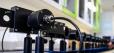
The Multi-wavelength absorption black carbon instrument MABI can determine the concentration and source of black carbon pollution.
A high-level strategy for ANSTO to support environmental sustainability

You are invited to submit to the various awards