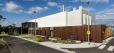
FAQs on the Mo-99 Manufacturing Facility
Frequently asked questions on the Mo-99 Manufacturing Facility and the ANSTO Nuclear Medicine project.


Showing 641 - 660 of 1508 results
Frequently asked questions on the Mo-99 Manufacturing Facility and the ANSTO Nuclear Medicine project.
ANSTO hosted an international training workshop on Pacific isotope hydrology at its Lucas Heights facility in Sydney from 16 - 20 March 2026, bringing together experts and water resource practitioners from across the Pacific and partner organisations.
The National Deuteration Facility is providing deuterated cholesterol, an essential ingredient in lipid nanoparticles for the delivery of vaccines using mRNA, to academic and industry partners.
Spatz neutron reflectometer becomes 15th neutron scattering instrument that is used for studies of biological materials and other soft matter.
This science week ANSTO is releasing a new way for students across Australia to learn about the periodic table of elements with augmented reality (AR). ANSTO's Free AR experience unlocks the periodic table to reveal a world of protons, neutrons and electrons and illustrates how useful they are to science and industry in the 21st century.
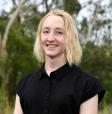
Morgan is a graduate at ANSTO. Last year she completed a Bachelor of Physics and Computer Science, and is now working in ANSTO’s Analytics team.

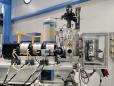
The high-energy heavy-ion microprobe is used for the characterisation or modification of material properties at depths from approximately 1 micrometre to maximum depths of up to 500 micrometres from the material surface.
ANSTO has a role in the global monitoring system on behalf of Australia to ensure non-proliferation of weapons and that nuclear technology is only used for peaceful purposes.
As the flagship facility of ANSTO’s Innovation Precinct at Lucas Heights, nandin recently celebrated its fifth anniversary in a special gathering held this week for its startups, businesses and innovation community.
An accomplished international photographer has capture dazzling new images of one component of the main ring at our Australian Synchrotron and provided an inside view of the electron’s path when it is used.

Dr Storr has worked for over 40 years in nuclear science and technology in a range of positions spanning operations, research and executive management.

A large team of ANSTO scientists in collaboration with University of Wollongong researchers has developed a new hybrid technique that enhances the effectiveness of a cutting-edge form of radiation therapy for advanced cancer.

A lesson in Science and Sustainability.
If you have someone to buy for who loves gifts that “give back” or prefers gifts that are interesting and thought-provoking–look no further.