Investigations of food authenticity
Use of nuclear techniques to benefit industry and consumers


Showing 661 - 680 of 1644 results
Use of nuclear techniques to benefit industry and consumers
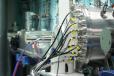
Guide to successful proposals and experiments at the Powder Diffraction beamline.
ANSTO hosted an international meeting of Expert and Policy group members for Generation IV Forum (GIF).
Today is World Environment Day, a United Nations initiative for encouraging worldwide awareness and action for the environment. This year’s theme is “Beat Air Pollution”, a call to action to combat this global crisis.
Nine PhD students are taking part in a rare opportunity to deliver an innovative solution to a real-world challenge for an industry partner in ANSTO’s National Graduate Innovation Forum in association with the Australian Council of Deans of Science and the Australian Institute of Nuclear Science and Engineering.
Professor Senden is an accomplished physical chemist and currently is the Pro Vice-Chancellor (Research Infrastructure and Entities) at the Australian National University.
ANSTO contributes to major study on global warming by measuring methane and carbon monoxide trapped in ice.
Professor Andy Baker is an established research scientist at UNSW Sydney, and is an interdisciplinary scientist with links between environmental and earth sciences and engineering which he has applied to speleothem palaeoenvironmental
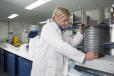
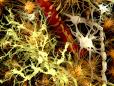
This program uses ANSTO’s nuclear capabilities to identify, quantify, and monitor the mechanisms which cause, or influence the development and progression of chronic diseases.
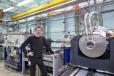
X-ray absorption spectroscopy (XAS) is a versatile tool for chemistry, biology, and materials science. By probing how x rays are absorbed from core electrons of atoms in a sample, the technique can reveal the local structure around selected atoms.
ANSTO and the National University of Singapore have signed an agreement to enable Singapore researchers to access ANSTO’s state-of-the-art beamline facilities at the Australian Synchrotron.
Experiments undertaken at the Australian Synchrotron have allowed research teams from Monash University and La Trobe University to clarify fundamental aspects of T-cell activation crucial to the body’s immune response to disease.
$80.2 million in new funding to expand the research capabilities of the Australian Synchrotron.
Applications are now being accepted for the Industry foundations Scholarship.
A large international research team led by Academia Sinica in Taiwan investigated how heat is transferred in an advanced thermoelectric material made with germanium (Ge) and tellurium (Te) and doped with antimony (Sb). These devices are used to power space probes such as the Mars Curiosity Rover.