

Showing 721 - 740 of 1694 results
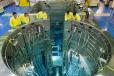
Nuclear facts
Nuclear science is applied by ANSTO's scientists in many areas that are vital to Australia's future, including agriculture, industry and manufacturing, minerals construction, health and environment. Our work in the development and applications and new knowledge and skills arises from world-class experience in nuclear science and technologies.
Nobel Prizes recognise insights at molecular and atomic scale
The Nobel Prizes for Physics, Chemistry and Medicine have been announced.

Global Innovation Projects Coordinator & Lecturer
Aaron is the International Research and Development Projects Coordinator at DesignFactory Melbourne, and currently delivers DFM’s global programs with the Centre fo rDesign Research at Stanford University, the SUGAR Network for Global Innovation and Ide
Champions are accelerating progress in the empowerment of women
Materials in extreme environments
Insights into the behaviour of structural materials in a molten salt environment
Major study identifies a potential drug target for lowering cholesterol
Study explored how key proteins manage dietary cholesterol absorption and elucidated crucial transport mechanisms that contribute to cholesterol balance in the body.
Improving carbon dating
Study helps make carbon dating a more accurate chronological tool.
New approach can improve monitoring of contaminants in groundwater
The outcome could have significant implications for better monitoring, management and remedial action of groundwater globally.
Work on Coordination Frameworks in Nature Chemistry
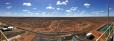
Project highlights
The Minerals consultancy group at ANSTO has expertise in chemical engineering, metallurgy, mineralogy, chemistry, geology, and radiation safety. We can support our client's project by providing process development services, technical review, and research.
Two ANSTO nominees for On the Job competition

Quantum technologies
ANSTOs capabilities are ideally suited for these investigations relating to quantum technologies.
ANSTO proudly participates in a new ARC Centre of Excellence for Indigenous and Environmental Histories and Futures
ANSTO is participating in a new Australian Research Council (ARC) Centre of Excellence for Indigenous and Environmental Histories and Futures (CIEHF) to be headquartered at James Cook University (JCU) that aims to bring Indigenous and environmental histories to the forefront of land and sea management.
ANSTO environmental scientists highlight need to monitor legacy nuclear fallout in Antarctica
ANSTO environmental scientists have alerted the scientific community of the critical need to monitor changes to ice containing potential nuclear fallout that reached Antarctica from 20th century atmospheric weapons testing.
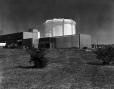
Our History
In April 15, 1953, Australia entered the nuclear science arena, when the Atomic Energy Act came into effect. The Australian Atomic Energy Commission (AAEC) followed and in 1987 the AAEC evolved into the Australian Nuclear Science and Technology Organisation (ANSTO) as it’s known today.

International Cooperation
ANSTO is engaged in international partnerships in the peaceful uses of nuclear science and technology throughout the world.
Are landscape changes linked to loss of traditional Indigenous Australian burning techniques?
Research investigates traditional Indigenous Australian burning techniques in managing landscape and reducing fuel loads.
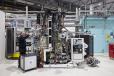
Soft x-ray spectroscopy
Soft x-rays are generally understood to be x-rays in the energy range 100-3,000 eV. They have insufficient energy to penetrate the beryllium window of a hard x-ray beamline but have energies higher than that of extreme ultraviolet light.
Nuclear science helps prove earliest Aboriginal occupation
ANSTO researchers contribute to study which finds evidence of Aboriginal occupation 65,000 years ago in Northern Australia.