
User Meeting 2020 Prizes & Awards
Awards and prizes granted at the User Meeting 2020 for scientists.


Showing 741 - 760 of 1371 results
Awards and prizes granted at the User Meeting 2020 for scientists.
Insights into the crystallisation process of twin crystals important for drug production.
Imaging protocol assesses molecular mechanism of work in the treatment of deadly childhood cancer neuroblastoma.
Research indicates that the portable x-ray fluorescence (XRF) is an appropriate analytical technique for determining seafood provenance at external sites.
New facility will greatly enhance Australia’s capability in stress engineering for industry

Synchrotron light is the electromagnetic radiation emitted when electrons, moving at velocities close to the speed of light, are forced to change direction under the action of a magnetic field.
The final report on the safety of Building 23 by the independent expert review team has been completed.
ANSTO contributes to major study on global warming by measuring methane and carbon monoxide trapped in ice.
A large collaboration of Australian and New Zealand researchers has established that a thin film technology can be used to monitor stormwater effectively and provides a way to translate the presence of metal contaminants into potential risks to aquatic ecosystems.
International study has revealed a clustering of charged particles in the microgravity environment of space,with implications for the development of materials and better drugs that depend on the mixing of two or more charged particles.
An environmental study supported by a citizen science project at ANSTO and UNSW has brought greater understanding of the movement of birds between all of Australia’s major water basins and the importance of the Murray-Darling River Basin.
This week women in science from 16 countries came together like never before. Inspiring women, young and old, were the first to complete the W4NSEC (Women for Nuclear Science Education and Communication) program that is designed to support women who are wanting to improve their education and communication skills in nuclear science.
A team of scientists led by Monash University and the University of Melbourne in association with the Peter Doherty Institute for Infection and Immunity have made progress in clarifying the molecular interactions that underpin how our adaptive immune cells recognise SARS CoV-2, which causes COVID-19.
Four annual awards in neutron scattering were announced at Australian Neutron Beam Users Group (ANBUG) and AINSE Neutron Scattering Symposium (AANSS) to individuals with strong links to ANSTO
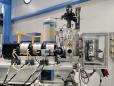
The high-energy heavy-ion microprobe is used for the characterisation or modification of material properties at depths from approximately 1 micrometre to maximum depths of up to 500 micrometres from the material surface.