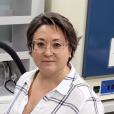
Material scientist
Role at ANSTO
Dr Inna Karatchevtseva undertakes work at ANSTO in two main areas: defence industry research and fundamental materials research.


Showing 81 - 100 of 127 results
Dr Inna Karatchevtseva undertakes work at ANSTO in two main areas: defence industry research and fundamental materials research.

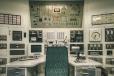
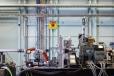
Samples on the X-ray fluorescence microscopy beamline at the Australian Synchrotron.
nandin member, SVSR, report on their proof-of-concept for a reusable Graphene Oxide (GO) membrane to capture waste water vapours from ageing sewerage systems.

Monash University is partnering with the Australian Synchrotron and other key institutions to launch a $2.9 million national project – delivering a robotic laboratory capable of drastically speeding up the invention, trials and commercialisation of medicines by Australian researchers.


Think Science! 2023 Summary and Results
A world-first processing technology developed in collaboration by ANSTO’s Minerals unit.

Online and interactive while in your home. Kids can zoom into these school holidays workshops and create movies, animations, arcade games, roller coasters and more. Limited spaces: book now.
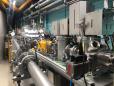
The Medium Energy- X-ray Absorption Spectroscopy beamlines provides access to XANES and EXAFS data from a bending magnet source, optimised for cutting-edge applications in biological, agricultural and environmental science in an energy range that is not currently available at the Australia Synchrotron.
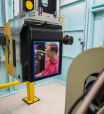
The High Performance Macromolecular Crystallography beamline will enable the study of very small (sub-5 micrometre) or weakly diffracting crystals, providing a state-of-the-art high-throughput facility for researchers. MX3 will be able to study the structures of large proteins and protein complexes for virology, drug design and industrial applications via goniometer mounted crystals, in-tray screening, or via serial crystallography methods.
Using nuclear techniques to help sustain Australia's finite groundwater resources

Ultra-flexible electronics has many potential applications within areas such as for example the military, healthcare and energy.

A new continuous record of temperature dating back 12,000 years provides an import resource in understanding current and future climate changes,

You are invited to submit to the various awards from ANSTO, User Advisory Committee (UAC) and Australian Neutron Beam User Group (ANBUG).