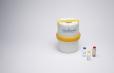
ANSTO's Gentech® Generator
Supporting healthcare professionals in Australia with easy-to-access resources related to ANSTO’s Gentech® Generator.


Showing 81 - 100 of 261 results
Supporting healthcare professionals in Australia with easy-to-access resources related to ANSTO’s Gentech® Generator.

ANSTO has agreed to participate in an Australian trial of a review of research infrastructure access proposals in which applicants remain anonymous to aid the removal of structural barriers to the career progression of Women in STEM.


On behalf of ANSTO thank you for your interest in our tours. We hope your visit to ANSTO will be both enjoyable and informative.
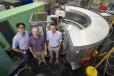
Neutron powder diffraction is particularly useful for materials with light elements in the presence of heavy ones and for magnetic materials such as superconductors, pharmaceuticals, aerospace alloys and much more.

Over the last decades, neutron, photon, and ion beams have been established as an innovative and attractive investigative approach to characterise cultural-heritage materials.

The X-ray fluorescence microspectroscopy beamline offers a range of x-ray absorption and fluorescence spectroscopy techniques at submicron length-scales. The beamline has two microscopes optimised for complementary studies.

The Infrared Microspectroscopy beamline combines the high brilliance and collimation of the synchrotron beam through a Bruker V80v Fourier Transform Infrared (FTIR) spectrometer and into a Hyperion 3000 IR microscope to reach high signal-to-noise ratios at diffraction limited spatial resolutions between 3-8 μm.


ANSTO’s user office in Melbourne offers access to the Australian Synchrotron, a world-class research facility with over 4,000 user visits per year. ANSTO seeks collaboration and partnerships with research organisations, scientific users and commercial users.
On behalf of ANSTO thank you for your interest in our tours. We hope your visit to ANSTO will be both enjoyable and informative.



ANSTO Publications Online is a digital repository for publications authored by ANSTO staff and collaborators since 1956.


Technical information on the Far Infrared beamline at the Australian Synchrotron.


View the upcoming proposal deadlines for access to ANSTO’s Research Portal. The User Office provides support for research proposals and enables you to leverage our world-class research infrastructure and facilities.


Applications, Recent results, Publications.