

Showing 801 - 820 of 1515 results
Evaluating the impact of nanomaterials on health and the environment
ANSTO has put together a robust multidisciplinary approach to understanding the impacts of nanomaterials, investigating a common food additive, E171 titanium dioxide, used primarily as a colouring agent in everyday foods.
Collaborative research brings new insights into radioactive waste, nuclear fuel and nuclear waste forms
ANSTO researchers have demonstrated longstanding expertise in the study of nuclear fuel and radioactive waste with two recent journal articles in a special issue of Frontiers of Chemistry.
Synchrotron scientist bound for Antarctic
Dr Katie Sizeland, a Postdoctoral Fellow on the Small Angle X-ray Scattering beamline at the Australian Synchrotron, has been chosen for the Homeward Bound STEMM leadership program
Exchange of expertise
A specialist in particle therapy treatment planning from the Mayo Clinic in the US, Professor Chris Beltran, recently visited ANSTO for an exchange for information.
COVID-19 Global NASA hackathon win
ANSTO-nandin innovation hub win global hackathon challenge from NASA with COVID19 solution.
Proposed new ANSTO waste facility
The independent nuclear regulator, ARPANSA, is currently accepting submissions about ANSTO’s planned $59.8 million Intermediate Level Solid Waste Storage Facility.
ANSTO’s Australian Synchrotron launches the Monash Precinct Network in Melbourne
ANSTO has warmly welcomed the official launch of the Monash Precinct Network by Victorian Member for Ashwood, Matt Fregon MP at a special event at the Australian Synchrotron.
ANSTO technology supports environmental monitoring of ancient Aboriginal rock art
ANSTO has installed a radon detector for Curtin University in Burrup WA as part of the Murujuga Rock Art Monitoring Program
All spins point up for SIKA
Polarised neutron scattering on Sika instrument
Sharing expertise with Japan
The National Deuteration facility is assisting with the establishment of a Japanese Chemical Deuteration Facility.
Nuclear science helps prove earliest Aboriginal occupation
ANSTO researchers contribute to study which finds evidence of Aboriginal occupation 65,000 years ago in Northern Australia.
Synchrotron techniques powerful tool to reveal inner workings of volcanoes
An article in Nature Geosciences has highlighted the power of synchrotron techniques to reveal the inner workings of volcanic systems that could potentially help with predictions of eruptions.
Nuclear tech helps power Perseverance Rover on Mars
A large international research team led by Academia Sinica in Taiwan investigated how heat is transferred in an advanced thermoelectric material made with germanium (Ge) and tellurium (Te) and doped with antimony (Sb). These devices are used to power space probes such as the Mars Curiosity Rover.
Annual Girls in Physics breakfast held at Australian Synchrotron
A large contingent of girls who study physics at high schools across Victoria travelled to the Australian Synchrotron in May to attend the annual Girls in Physics breakfast.
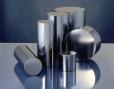
Silicon irradiation
ANSTO is one of the world's leading providers of irradiation services for silicon ingots, which are used by the multimillion dollar electronics industry across Europe and Asia. Each year, ANSTO irradiates more than 50 tonnes of silicon.

Deaf Youth Science Camp
The 2025 Deaf Youth Science Camp is a chance for Deaf/hard-of-hearing young people (aged 12-17 years old) to participate in an immersive science experience. At the camp, participants will do hands-on science activities, go on tours of different science facilities, and meet Deaf STEM professionals. The camp is also an opportunity to develop personal and leadership skills as well as enhance friendship networks.
Running (simulated) rings around cancer
Ultra-realistic simulations of a PET imaging system for next-generation radiotherapy: Collaboration giving back to the open source science community.
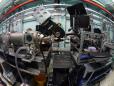
Technical information - SAXS / WAXS
Technical information on the SAXS / WAXS beamline at the Australian Synchrotron.
The science of fireworks
There is chemistry at work to help us enjoy the New Year's Eve celebration.