
Reducing cadmium in cocoa
New international limits on the cadmium content of cacao products have spurred research to discover how cadmium accumulates in cacao beans, and the effects of processing.


Showing 801 - 820 of 1023 results
New international limits on the cadmium content of cacao products have spurred research to discover how cadmium accumulates in cacao beans, and the effects of processing.
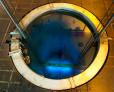
ANSTO operates a range of cobalt-60 gamma irradiators, providing the Australian community with a range of irradiation services for medical, health, industry, agriculture and research purposes.
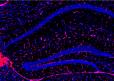
Research is undertaken to characterise and optimise the beneficial impacts of radiation on living matter
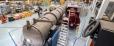
All new and returning science facility users are required to complete a Visit Request to identify the proposal/reason for attendance at ANSTO.

ANSTO provides secondary students with a range of learning resources for those interested in science or studying for exams. For teachers, ANSTO provides learning resources and professional development, as well as in-school-term science tours and videoconferences. Workbooks are provided as required learning material to accompany a school visit to ANSTO. They can also be used on their own as a classroom resource.

Come and discover the world of nuclear science at ANSTO - book a school tour in Sydney today.
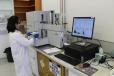
ANSTO has extensive nuclear analytical capabilities that can be applied to address broad range of challenges within the Resources sector.
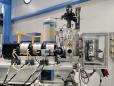
The high-energy heavy-ion microprobe is used for the characterisation or modification of material properties at depths from approximately 1 micrometre to maximum depths of up to 500 micrometres from the material surface.


Role at ANSTO

The Macromolecular and Microfocus Crystallography beamlines at the Australian Synchrotron (MX1 and MX2) are general purpose crystallography instruments for determining chemical and biological structures.

Under section 35 of the Public Governance, Performance and Accountability Act 2013, all Commonwealth Government bodies are required to annually prepare a Corporate Plan, which must be published on their websites by 31 August.


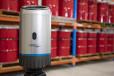

CORIS360® GNI images gamma-ray and thermal neutron radiation sources, delivering an unprecedented ability to detect, localise, and identify nuclear materials.
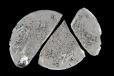
Within the bulk structure of such glasses, boron is known to be a key actor, as it exhibits intriguing and composition-dependent changes in coordination state that often drive properties.

ANSTO continually monitors environmental gamma radiation from a station located in Engadine NSW. ANSTO uses environmental radiation data to evaluate atmospheric dispersion from its site. This radiation is almost completely natural background radiation.