Collecting ice cores for research
Dr Andrew Smith has just finished collecting ice cores and snow samples on the summit of Law Dome in Antarctica,


Showing 821 - 840 of 1226 results
Dr Andrew Smith has just finished collecting ice cores and snow samples on the summit of Law Dome in Antarctica,
The Nobel Prizes for Physics, Chemistry and Medicine have been announced.
ANSTO scientist, Dr Klaus Wilcken of the Centre for Accelerator Science, used cosmogenic nuclide dating to determine the ages of layered sand and gravel samples, in which seven footprints of the flightless bird, the moa, were found on the South Island in New Zealand in 2019.
Investigators from UNSW and ANSTO have provided insights into the dynamic interactions of atoms in a promising material for sodium-ion batteries.
ANSTO's reactor utilisation team has received an international award.
ANSTO has warmly welcomed the official launch of the Monash Precinct Network by Victorian Member for Ashwood, Matt Fregon MP at a special event at the Australian Synchrotron.
With zero carbon emissions, green hydrogen is a promising fuel for many industries. PhD candidate Robert Walwyn, is researching new, advanced materials for safe and effective hydrogen gas storage.

Accommodation Information
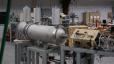
Micro-Particle Induced X-ray Emission (µPIXE) is used to construct elemental maps that show variations of an element's concentration across the sample surface.
Potential new treatments and tools for depression under development.
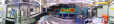
Using the theory of compressed sensing technology, a team of physicists and scientists invented and developed the CORIS360® platform imaging technology. Compressed sensing imaging can generate an image with far fewer samples compared with traditional imaging techniques.
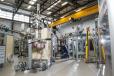
Particle Induced X-ray Emission (PIXE) is a powerful and relatively simple analytical technique that can be used to identify and quantify trace elements typically ranging from aluminium to to uranium.
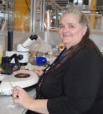
In a world-first study, Australian environmental scientists have used cave stalagmites as a record of groundwater replenishment over time, that showed the current level of rainfall recharging groundwater in southwest WA is at its lowest for at least the last 800 years.
Phenomenon predicted by Nobel Prize recipient

ANSTO User Meeting 2021 - Speakers
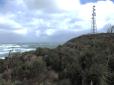
Measurements of the naturally-occurring radioactive gas radon can be used to accurately categorise the degree of atmospheric mixing.