

Showing 841 - 860 of 1319 results

What we do
ANSTO leverages great science to deliver big outcomes. We partner with scientists and engineers and apply new technologies to provide real-world benefits. Our work improves human health, saves lives, builds our industries and protects the environment.
Research and development
Our research group carries out fundamental research uniquely applied to industrial problems in the areas of uranium, rare earth and lithium processing.
Applications - Kowari
Applications, Recent results, Publications.
Experiments carried out on Antarctic flight
State- of-the-art microdosimeters used in research
Space research enabled with new capability
New high energy ion microprobe beamline supports space research on the effects of radiation on astronauts.
Successfully navigating the challenges of replacing a component in a nuclear reactor
The installation of a cold neutron source (CNS), a component that reduces the energy and speed of the neutrons from a research reactor for use in scientific instruments, was successfully completed in September 2024.
Research Scientist/Structural Modeller, Nuclear Fuel Cycle
Role at ANSTO

Highlights - Energy Materials
Highlights of the Energy Materials Project.
Fossilised remains of Ice Age top predator dated with radiocarbon

Masters of Design Student - Swinburne University
Being in her final year of Masters of Design at Swinburne University, Pratibha started her journey as a Lifestyle Product designer. With an itch of curiosity, she has been expanding her knowledge base into multiple areas of design.
Improving the performance of cold sprayed additive manufactured Titanium
Sample Environments
The Australian Centre for Neutron Scattering maintains a sample environment service for the instruments. It comprises a range of sample environments, two sample environment laboratories and four sample preparation laboratories.
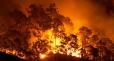
Environmental change
Targeted research to improve knowledge of past and present climate and the evolution of landscape.
Feather Map of Australia Project - Thank you citizen scientists of Australia
Your efforts are helping better manage our wetlands and waterways, and protect the precious wetland birds that rely on them.
Sharing expertise with Japan
The National Deuteration facility is assisting with the establishment of a Japanese Chemical Deuteration Facility.
Advancing particle therapy
Meeting of minds about potential next-generation cancer treatment for Australians

Climate Change
Research to date and trace past climate change and interpret the indicators and drivers of the Earth's climate.
OPAL reactor back in business
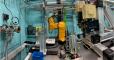
Micro-Computed Tomography beamline (MCT)
With enhanced submicron spatial resolution, speed and contrast, the Micro-Computed Tomography beamline opens a window on the micron-scale 3D structure of a wide range of samples relevant to many areas of science including life sciences, materials engineering, anthropology, palaeontology and geology. MCT will be able to undertake high-speed and high-throughput studies, as well as provide a range of phase-contrast imaging modalities.