Funding and infrastructure boost for Australian Synchrotron
$80.2 million in new funding to expand the research capabilities of the Australian Synchrotron.


Showing 961 - 980 of 2253 results
$80.2 million in new funding to expand the research capabilities of the Australian Synchrotron.
The nuclear medicine community has welcomed the Australian Government’s decision to provide $30 million in funding to ANSTO for the design of a new nuclear medicine manufacturing facility.
Applications are now being accepted for the Industry foundations Scholarship.
Multi-faceted approach to dating Australian Indigenous rock art from Kimberley region
ANSTO has made two public submissions to parliamentary inquiries with another to be submitted in February 2020 on matters relating to nuclear technologies, their peaceful applications, and the nuclear fuel cycle.
New facility will greatly enhance Australia’s capability in stress engineering for industry

Two ANSTO scientists were part of a research team led by the University of Wollongong, who are finalists for the 2019 NSW Environment, Energy and Science (DPIE) Eureka Prize for Environmental Research.

How expensive and time consuming are your tests for optimising your catalyst?
A large group of ANSTO environmental scientists and collaborators have produced the first groundwater stable isotopes, ‘isoscapes’, intuitive maps with grid data, across NSW combining new and pre-existing isotope measurements.
Sample environments, Data Analysis, Mail-In Services
Bushfires in proximity to ANSTO during the 2018 bushfires.
ANSTO shared expertise on next-generation reactors and nuclear power with sustainable energy experts at the Australian Academy of Science symposium in May.

Following your experiment at the Australian Synchrotron there are certain tasks that users can complete including a user feedback survey and claiming reimbursement for travel expenses.
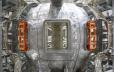
ANSTO signed a cooperation agreement with ITER to enable Australia to engage with and benefit from participation in the world’s largest engineering project to create fusion energy.