

Showing 961 - 980 of 1508 results
ANSTO to host 12th International Conference on Hot Isostatic Pressing
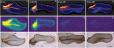
Radiotracer studies
The use of radioisotopes, radiolabeled molecules and radioactive particles in conjunction with a range of quantitative imaging spectroscopy and radiation counting methods.
ANSTO offers new career opportunities for Aboriginal and Torres Strait Islander peoples
Australia’s knowledge centre for nuclear science and engineering, ANSTO, announced an exciting career opportunity for Aboriginal and Torres Strait Islander peoples.

After your experiment
Following your experiment at the Australian Synchrotron there are certain tasks that users can complete including a user feedback survey and claiming reimbursement for travel expenses.
Instrument Scientist
Role at ANSTO
ANSTO recognises the contribution of staff for outstanding work, innovation, and excellence
ANSTO announces the recipients of the 2022 organisational awards
Fusion research in Australia
Australia part of global renaissance in fusion power research symbolised by ITER experiment
Leader, Nuclear Stewardship
Role at ANSTO
The workshop will offer a comprehensive introduction to the latest scientific analytical tools which are exclusively offered across the facilities under the operation of ANSTO, including neutron, synchrotron and accelerator based techniques.
Sydney

Senior Health Physicist
Samantha is a Senior Health Physicist with Radiation Protection Services.
Accelerator Physicist
Role at ANSTO

Highlights - Water Isotope Network
Highlights on the Water Isotope Network project.

Wildlife Conservation Officer, Taronga Conservation Society Australia
Phoebe joined Taronga as part of the Wildlife Hospital team in 2012, where she developed a research interest in conservation forensics, leading an international project developing forensic tools to help save the world’s most hea

User Meeting 2020 Prizes & Awards
Awards and prizes granted at the User Meeting 2020 for scientists.
ANSTO to undertake routine shipment of spent fuel in 2025
International researchers overturn assumptions about the structure of most widely used hydrogel
Research confirms that methylcellulose, one of the most widely used hydrogel-forming materials in biomedical research and consumer products, organises itself into a structural architecture
Building new knowledge of advanced materials in extreme environments
An international research collaboration between the University of New South Wales (UNSW), the Shanghai Institute of Applied Physics (SINAP) and ANSTO has provided insights into the performance of advanced material for use in the high-temperature environment of molten salt systems.
Robotics hub to improve management of Australian infrastructure and assets
ANSTO participation in ARC on Intelligent Robotic Systems for Real-time Asset Management has potential benefit in the management of infrastructure and assets
It's all about the interface with multi-use polymer brushes
The University of Newcastle and UNSW [GW1] are using advanced neutron scattering techniques at ANSTO to carry out research on the structure of polymers in complex salt environments that will ultimately provide a way to predict their behaviour for real-world applications.