

Showing 101 - 120 of 261 results
Distinguishing black carbon sources
MABI instrument can determine both the concentration and source of black carbon pollution in the atmosphere.
Webinar: Impacts of Decommissioning Oil & Gas Infrastructure
Connect with the businesses and organisations seeking better understanding decommissioning oil and gas infrastructure and the potential impact of contaminants on marine life.

Teacher Professional Development Courses
ANSTO is an experienced provider of Teacher Professional Development for Australian and International teachers and our courses cover a wide range of topics. Hear from expert speakers, receive new education resources, and develop lessons for your own class.
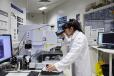
Infrared microspectroscopy
The Infrared Microspectroscopy beamline combines the high brilliance and collimation of the synchrotron beam through a Bruker V80v Fourier Transform Infrared (FTIR) spectrometer and into a Hyperion 3000 IR microscope to reach high signal-to-noise ratios at diffraction limited spatial resolutions between 3-8 μm.
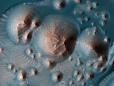
The characterisation of planetary materials
ANSTO provides a range of capabilities using neutrons, X-rays and infrared radiation to study the solids, liquids and gases that might be found in materials in our solar system and beyond.
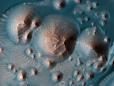
The characterisation of planetary materials
ANSTO provides a range of capabilities using neutrons, X-rays and infrared radiation to study the solids, liquids and gases that might be found in materials in our solar system and beyond.
Apprenticeship Program
Ready to start a hands-on career? ANSTO’s Apprenticeship Program gives you the chance to earn while you learn, build real trade skills and contribute to work that supports Australia’s leading nuclear science and technology organisation.
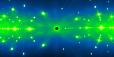
Services - Koala
Sample environments, Data analysis and reduction on the Koala instrument.
STEM-SAGE Initiative
Inspiring young women to be part of next generation of scientists.

STEAM Club Online
Learn. Create. Innovate

Project Geoscientist
Role at ANSTO

Online learning
Discover the amazing world of nuclear science from your classroom. Join us for Meet an Expert, Nuclear Science Inquiry Skills, Junior Science, and Online Depth Study sessions for Chemistry, Physics and Investigating Science.

Total Fluorine Analysis
ANSTO offers accelerator-based particle-induced gamma-ray emission techniques to determine total fluorine concentration in a range of solid materials and rapidly screen for the presence of PFAS (perfluoroalkyl and polyfluoroalkyl substances).
You are what you eat
Cracking the code for crop nutrition and food quality with X-ray fluorescence microscopy.

Principal Scientist - Powder Diffraction
Dr. Qinfen Gu leads the Powder Diffraction beamline team at the Australian Synchrotron, ANSTO, and serves as an Honorary Principal Fellow in the Department of Chemical Engineering at the University of Melbourne.
Transistors and NASA's radiation paradox: strength in detection, weakness in space operations
The nature of Metal-Oxide-Semiconductor Field Effect Transistors (MOSFETs) present a fascinating paradox in space exploration. Their strength in radiation detection becomes their weakness in space operations, exposing an Achilles' heel for NASA. Yet, these same devices monitor radiation doses received by humans on earth and in space.

STEM Career Tours
Discover the many career opportunities in the nuclear industry on a special behind the scenes tour of ANSTO.

Reconstructing Australia’s fire history from cave stalagmites
Research is being undertaken through an Australian Research Council Discovery Project "Reconstructing Australia’s fire history from cave stalagmites", led by Professor Andy Baker at UNSW Sydney and Dr. Pauline Treble at ANSTO. The project aims to calibrate the fire-speleothem relationship and develop coupled fire and climate records for the last millennium in southwest Australia.
Principal Research Scientist