Nanoscale insights to improve organic solar cell thin films
A large international team has provided an understanding of how nanoscale interactions affect the thermal stability of a type of next generation organic solar cells.


Showing 101 - 120 of 887 results
A large international team has provided an understanding of how nanoscale interactions affect the thermal stability of a type of next generation organic solar cells.
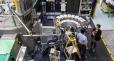
Wombat is a high intensity neutron diffractometer that is primarily used as a high-speed powder diffractometer, but has also expanded into texture characterisation and single-crystal measurement, particularly diffuse scattering.
ANSTO researchers investigate the behavior of materials in extreme environments, to analyse and predict how they will behave under adverse conditions.

Applications, recent results, publications.
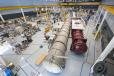
The Australian Centre for Neutron Scattering (ACNS) is a major research facility for neutron science that comprises a suite of neutron instruments with a range of techniques for scientific investigations in physics, chemistry, materials science, medicine and environmental science among other fields.
New technology is being developed in Sydney to recycle used Personal Protective Equipment (PPE) and turn it into raw materials for 3D printing.
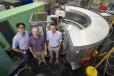
Neutron powder diffraction is particularly useful for materials with light elements in the presence of heavy ones and for magnetic materials such as superconductors, pharmaceuticals, aerospace alloys and much more.
Neutron association award to energy materials researcher Prof Vanessa Peterson.
In association with the IAEA, ANSTO supports nuclear security in Australia, the Asia-Pacific Region, and around the world, by providing international leadership in nuclear forensic science.
Neutron scattering helps clarify the arrangement of magnetic vortices, skyrmions, in material
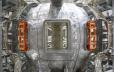
ANSTO signed a cooperation agreement with ITER to enable Australia to engage with and benefit from participation in the world’s largest engineering project to create fusion energy.
ANSTO, as the Australian centre for nuclear-related research and as the custodian of large research infrastructure is well-positioned to undertake research on molten sale based reactor systems using its capabilities and expertise.
A collaboration of Australian scientists has used ANSTO’s Australian Synchrotron to measure the amount of carbon that is captured in microscopic seams of deep-sea limestone, which acts as a carbon sink.
ANSTO has contributed to work by scientists from the Tokyo Institute of Technology on a promising proton conductor for next-generation ceramic fuel cells.