Removal of dangerous contaminants from dirty water
A group from Monash university has sought to make a new innovative nano-porous sieve material which has the potential to be produced on a global scale and is effective for a much longer time.


Showing 101 - 120 of 485 results
A group from Monash university has sought to make a new innovative nano-porous sieve material which has the potential to be produced on a global scale and is effective for a much longer time.
ANSTO has secured a $1.62 million Medical Research Future Fund (MRFF) grant under the Australian Brain Cancer Mission’s 2024 Brain Cancer Discovery and Translation program
Recent catastrophic Australian bushfires produced extremely high levels of fine particle pollution.

The Australian Synchrotron provides funding support for successful beamtime applicants in the form of travel funding and/or onsite accommodation. Travel funds granted are to be used solely to cover the majority of the cost to travel to the AS facility. The User Office will book accommodation for interstate user groups at the onsite AS Guesthouse.

ANSTO today welcomed a significant Federal Government funding allocation to further safeguard the production of life-saving nuclear medicines in Australia.
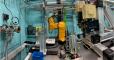
With enhanced submicron spatial resolution, speed and contrast, the Micro-Computed Tomography beamline opens a window on the micron-scale 3D structure of a wide range of samples relevant to many areas of science including life sciences, materials engineering, anthropology, palaeontology and geology. MCT will be able to undertake high-speed and high-throughput studies, as well as provide a range of phase-contrast imaging modalities.
ANSTO-nandin innovation hub win global hackathon challenge from NASA with COVID19 solution.

With zero carbon emissions, green hydrogen is a promising fuel for many industries. PhD candidate Robert Walwyn, is researching new, advanced materials for safe and effective hydrogen gas storage.

The SAAFE Program supports early career researchers at PhD and Postdoctoral level to expand research and innovation activities within Human Health, the Environment and the Nuclear Fuel Cycle, to initiate sustainable research networks and linkages to support Australia, New Zealand and France research and innovation.
Project Bright, the construction of eight new beamlines at ANSTO’s Australian Synchrotron has reached a milestone by achieving ‘First Light’ for the new micro-computed tomography (MCT) beamline in late NovembeR.