Understanding pollutants impact
Research highlights how biodistribution of a toxic substance essential to understand all exposure risks.


Showing 1021 - 1040 of 1371 results
Research highlights how biodistribution of a toxic substance essential to understand all exposure risks.
A cross-disciplinary team has used laboratory-based and synchrotron-based infrared spectroscopy imaging techniques to monitor the waxy surface of living plant leaves in real-time to gain insights into plant physiology in response to disease, biological changes or environmental stress.
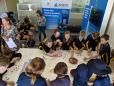
ANSTO's education team located in the Discovery Centre offers a wide variety of learning resources and engaging content that aligns with the NSW curriculum, as well as offering the general public insights into science, ingenuity and sustainability.
ANSTO researchers have demonstrated longstanding expertise in the study of nuclear fuel and radioactive waste with two recent journal articles in a special issue of Frontiers of Chemistry.


A new imaging technology developed at ANSTO makes it possible to image, identify and locate gamma-ray radiation in a safe and timely manner.
University of Melbourne researchers have investigated a method to produce magnetic nanoparticles in Australia for use in COVID-19 PCR tests.
Australia and Sri Lanks signs new partnership to fight chronic kidney disease.

On the 10th of October 2025, the Minister for Industry, Science and Technology provided his Statement of Expectations to ANSTO.

ANSTO's Sydney locations are home to the Open Pool Australian Light-water (OPAL) multi-purpose reactor, the Centre for Accelerator Science (CAS), the Australian Centre for Neutron Scattering, the National Research Cyclotron and the National Deuteration Facility.

The Australian Centre for Neutron Scattering and National Deuteration Facility have announced the first recipients of the Neutron and Deuteration Impact Awards.
Technology at heart of award-winning wastewater innovation from BioGill.
A new imaging technology developed at ANSTO makes it possible to image, identify and locate gamma-ray radiation in a safe and timely manner.
A large collaboration of European investigators gained insights into how the SARS-CoV-2 spike protein (S protein) impacts with lipid metabolism in the body with implications for COVID-19 infection and mRNA vaccination.
Energy researchers from UNSW have reported progress using controlled architectural design and structural engineering as a method to fine-tune materials to have simultaneous high power and high energy density for the electrochemical storage in portable devices.