A possible world record: Studying thin films under extreme temperatures with reflectometry
A team of researchers from ANSTO and University of Technology Sydney have set a record by conducting thin film experiments at 1100 degrees C.


Showing 1081 - 1100 of 2173 results
A team of researchers from ANSTO and University of Technology Sydney have set a record by conducting thin film experiments at 1100 degrees C.
Meeting of minds about potential next-generation cancer treatment for Australians
Twenty-four participants from Asia and the Pacific travelled to ANSTO for an International Atomic Energy Agency Regional Training Course on ‘Production and preclinical evaluation of emerging cyclotron-based radiopharmaceuticals’
Highlighted at radiation protection congress
Launch of the second phase of construction of the underground laboratory to detect dark matter.
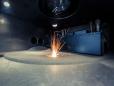
ANSTO is working with academic and industry partners on the development of multiscale numerical simulations of Laser Metal Deposition (LMD) 3D printing.
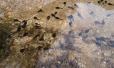
Radioisotope tracing technique are used to understand the uptake of contaminants, and nutrients, bioaccumulation, by aquatic organisms and terrestrial plants.
Southern Cross researcher Dr Alana Gall, who recently became an ANSTO research Fellow, has been awarded more than $640,000 to lead a research program focused on First Peoples' Cultural Medicines (also called bush medicine) in Australian healthcare.
Using isotopes to understand saltwater intrusion of Rottnest Island groundwater
ANSTO contributes to new international project to improve how the world assesses the economic viability of Small Modular Reactors
ANSTO has almost seventy years of experience in advancing an understanding of the management of spent nuclear fuel and delivering safe and reliable forms for radioactive waste.
Dr Mitra Safavi Naeini continues her commentary of the radiation studies being undertaken in the Artemis II mission.
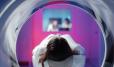
Health researchers at ANSTO use world-class nuclear and isotopic techniques to undertake research and development activities to address some of the most challenging health problems.
An international team led by ANSTO has been awarded a prestigious program grant from the Foundation for Australia-Japan Studies.
The Australian led regional cancer care project in medical physics held its first regional training course in Malaysia to progress Rays of Hope.
The final report on the safety of Building 23 by the independent expert review team has been completed.
The nuclear analysis team at ANSTO recently had a significant role in the re-design and optimisation of a cold neutron source facility for the reactor, its installation and the subsequent restart after a six-month shutdown.