ANSTO strengthens its collaboration with IAEA to support environmental protection
Stronger research link with IAEA with the establishment of Collaborating Centre at ANSTO to support environment and cultural heritage activities


Showing 1101 - 1120 of 2438 results
Stronger research link with IAEA with the establishment of Collaborating Centre at ANSTO to support environment and cultural heritage activities

An instrument used to study any materials with structure of the length scale 1-100nm.
To celebrate International Women’s Day, ANSTO opened its doors to more than 50 female STEM students who heard from two accomplished ANSTO’s female scientists and STEM champions.

In space, without the protection of the magnetosphere, the type and dose of radiation is considerably different to what is naturally experienced on earth. However, it is the secondary particles of lower energies created when galactic and cosmic radiation interacts with shielding that is of concern for astronauts.

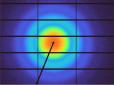
The Biological Small Angle X-ray Scattering beamline will be optimised for measuring small angle scattering of surfactants, nanoparticles, polymers, lipids, proteins and other biological macromolecules in solution. BioSAXS combines combine a state-of-the-art high-flux small angle scattering beamline with specialised in-line protein purification and preparation techniques for high-throughput protein analysis.
Researchers from UNSW have found an extraordinary material that does expand or contract over an extremely wide temperature range and may be one of the most stable materials known.

Highlights on the Water Isotope Network project.

Planetary science is an emerging research theme in Australia, and research at ANSTO is embedded in the heart of this.
New class of conducting materials found for potential use in next generation fuel cells and other applications.
PhD candidate Vienna Wong is using her FutureNow Scholarship to research ultra-high temperature ceramics, which are emerging materials for extreme environments.

ANSTO provides a list of journal, book, technical and conference publications associated with the Australian Centre for Neutron Scattering, and the Centre for Accelerator Science.

Andrew Manning is the 3He Polarisation Instrument Scientist at ACNS, who is responsible for all neutron polarisation capabilities (except for specular polarised neutron reflectometry on Platypus; for this, see Dr. David Cortie).

Highlights of the Magnetism Project.