
Industries
For more than half a century, ANSTO's specialised services have supported the unique requirements of customers working in health, agriculture, defence, mining, nuclear medicine and more.


Showing 1101 - 1120 of 1603 results
For more than half a century, ANSTO's specialised services have supported the unique requirements of customers working in health, agriculture, defence, mining, nuclear medicine and more.
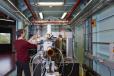
Beamtime Guide on the X-ray Fluorescence Microscopy beamline at the Australian Synchrotron.

This program explores the mechanism and outcome of the interaction of radiation on biological systems in order to improve our understanding of the impact of radiation on the brain, optimise radiotherapy and develop mitigation strategies for space travellers.
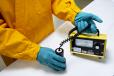
ANSTO: Australia’s knowledge centre for nuclear science and engineering.

You may be confident about the major crystallographic phases of your ore body – but what about those minor phases that can affect processing or cause long-term problems with remediation?

Explore topics such as biosecurity, food technology, laboratory-developed foods in the 2021 hackathon theme of Food: Different by Design
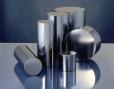
ANSTO is one of the world's leading providers of irradiation services for silicon ingots, which are used by the multimillion dollar electronics industry across Europe and Asia. Each year, ANSTO irradiates more than 50 tonnes of silicon.

ANSTO's Melbourne location is home to the ANSTO-owned and operated Australian Synchrotron. The Synchrotron is one of the Australia's most significant pieces of scientific infrastructure.


In space, without the protection of the magnetosphere, the type and dose of radiation is considerably different to what is naturally experienced on earth.
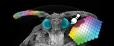
Are you a school student who likes a creative challenge? Enter our new Incredible Insects Competition during the month of July 2021! You could win yourself a prize pack worth over $100! School students from all States/ Territories of Australia are invited to enter.

COVID-19 is being investigated thanks to our world-class infrastructure, researchers and scientists.
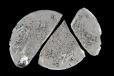
Within the bulk structure of such glasses, boron is known to be a key actor, as it exhibits intriguing and composition-dependent changes in coordination state that often drive properties.

Unique landmark instrumentation and expertise are a hallmark of ANSTO’s sovereign capability, unavailable anywhere else in Australia. Our ability to identify the source of hazardous particulates in air, the age of water in aquifers and the detailed chemistry of toxic elements in complex soil and biota specimens are just some examples of ANSTO capability.
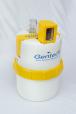
ANSTO’s nuclear medicine processing and distribution facility assembles, loads, tests and distributes a range of nuclear medicine products, including Mo-99. The Mo-99 is dispensed into an ANSTO radiopharmaceutical Gentech® Generator where it decays to Tc-99m.

Applications are currently open for the 2024 Scholarship AINSE ANSTO French Embassies (SAAFE) Research Internship Program. The SAAFE Program supports early career researchers at PhD and Postdoctoral level to expand research and innovation activities within Human Health, the Environment and the Nuclear Fuel Cycle, to initiate sustainable research networks and linkages to support Australia, New Zealand and France research and innovation.

Detailed data on ANSTO electricity use and CO2 emissions for FY2024 - FY2025
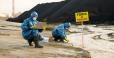
Billions of tonnes of iron ore tailings are generated each year from the mining industry. Converting these toxic tailings into soil-like materials which can develop and sustain plant and microbial communities is critical for mine site remediation and improved environmental outcomes.

New international limits on the cadmium content of cacao products have spurred research to discover how cadmium accumulates in cacao beans, and the effects of processing.
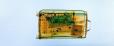
Low-cost X-ray detectors featuring high sensitivity, durability and physical flexibility are required in fields ranging from medical imaging to defence. In this study, a new material for X-ray detection was coupled with inkjet printing to produce a series of prototype X-ray detectors.