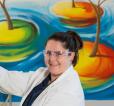
Tritium Facility Officer
Role at ANSTO
Kellie-Anne Farrawell is the Tritium Facility Officer who works within the Isotope Tracing in Natural Systems platform within Nuclear Science and Technology.


Showing 1121 - 1140 of 1508 results
Kellie-Anne Farrawell is the Tritium Facility Officer who works within the Isotope Tracing in Natural Systems platform within Nuclear Science and Technology.
Two ANSTO scientists were part of a research team led by the University of Wollongong, who are finalists for the 2019 NSW Environment, Energy and Science (DPIE) Eureka Prize for Environmental Research.
3D models of multilayered structures on engineering scale from nanoscale damage profiles.
ANSTO has supported a new study published in Quaternary Science Reviews that dates the dramatic collapse of one of the largest glaciers ever documented in the Himalayas. The findings overturn a long-held assumption about what sustains wet-climate glaciers.

ANSTO provides access to specialised facilities and capabilities by application. Please ensure that you contact the relevant ANSTO scientist for advice before submitting a proposal.
Australia has one multi-purpose nuclear reactor, the Open Pool Light Water Reactor (OPAL) and it is not used to generate ‘nuclear power’.
Accelerator technique used in pioneering biomaterials research led by the University of Sydney.
Instrument scientist and expert in low dimensional magnetism Dr Kirrily Rule joins FLEET ARC Centre.
Favourable conceptual design review may lead to expanded role for Australia on ITER diagnostics.
Analysing the microstructure of paracetamol using synchrotron infrared optical technique provides insights.
Materials researcher with a passion for chemistry, Matthew Teusner is investigating lithium sulfur materials to support the next step in cleaner battery power.
Environmental scientists at ANSTO will contribute to major Antarctic research project in Antarctica funded by the Australian Research Council.
Research confirms heating can increase strength of a type of hydrogel.
Advanced X-ray techniques have revealed new structural details about the specific arrangement of atoms in conjugated polymers, an important class of materials that are used in LEDs, organic solar cells, transistors, sensors and thermoelectric power devices.
ANSTO has contributed to research that indicated that Aboriginal people had a broad diet and intensive plant processing technologies, allowing them to respond to changes in climate, sea level and vegetation over the last ca. 65,000 years.
This joint initiative at ANSTO has developed a new capability: solid surface radiolabelling to evaluate Auger emitting sources for next-generation targeted therapy.

A new study by researchers from Curtin University using the infrared (IR) and X-ray fluorescence microscopy (XFM) beamlines at the Australian Synchrotron has provided a better understanding of the chemical and elemental composition of latent fingermarks.