

Showing 1181 - 1200 of 1508 results
Environmental research at archaeological site
Insights about Mayan Empire relevant for current climate challenges
Immune system's friendly fire can turn malaria deadly
Looking deeply in nitrogen cycling
New three year study with UNSW for Cotton Research Development Corporation.
A possible world record: Studying thin films under extreme temperatures with reflectometry
A team of researchers from ANSTO and University of Technology Sydney have set a record by conducting thin film experiments at 1100 degrees C.
ANSTO and University of Wollongong collaborate on new quality control device to enhance precision in advanced cancer treatment
Researchers from the Health Research and Technology Group at ANSTO and the University of Wollongong have developed a new device that could improve the quality control of accelerator-based boron neutron capture therapy, a promising radiation therapy for treating aggressive cancers.
Photographer captures images inside the main ring of the Australian Synchrotron
An accomplished international photographer has capture dazzling new images of one component of the main ring at our Australian Synchrotron and provided an inside view of the electron’s path when it is used.

Social media terms of engagement
Creating a safe, inclusive and respectful online community for all.
Rhodium nanoparticles
Successful synthesis of nano-material that improves catalytic converter efficiency.
Structure of molecules on nanoparticles characterised
Powerful combination of deuteration and neutron scattering used to characterise structure of molecules on surface of nanoparticles.

SIKA Instrument Scientist
Role at ANSTO

Archive
Archive of ANSTO research publications, seminars and short talks.
Window into the cell
Access to a ‘window into the cell’ with University of Wollongong cryogenic electron microscope at ANSTO.
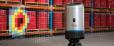
Features and benefits
Overlaying a 360° x 90° radiation image onto a panoramic optical image of the scene, makes interpretation much easier. The spectroscopic detector at the heart of the imager enables the accurate visualisation and identification of sources across a broad energy range.

Electronic Technician
I’m an electronics technician working with the Data Acquisition and Electronics Group to assist in the design, development, installation and commissioning of neutron instrument electronic systems as part of NBI2 project. My role also includes deve
Lead Engineer, Nanoprobe beamline
Role at ANSTO
Dating Aboriginal rock art using mud wasp nests
Radiocarbon dating of mud wasp nests was used as an indirect method of dating the Gwion Gwion style.
Funding supports seafood traceability
Grant supports development of handheld technology to verify origin of seafood.
COVID-19 proof, healthy workstation wins ACS COVID-19 Online Hackathon
Powerhouse Museum used powerful non-invasive nuclear and accelerator techniques to gain information about significant Aboriginal cultural belongings
A number of sophisticated non-invasive nuclear and accelerator techniques were used to provide information about the origin and age of an Australian Aboriginal knife held in the collection of the Powerhouse Museum.