

Showing 121 - 140 of 159 results
Scholar Profile - Phil Sutton
Since 1962, the United Uranium Scholarship has helped promising young scientists in the field of nuclear energy extend their knowledge and expertise. In 2022, scholarships were awarded to several ANSTO researchers, including Phil Sutton.
ANSTO joins international counterparts in peaceful nuclear monitoring
The Australian Nuclear Science and Technology Organisation (ANSTO) has joined a team, lead by the US Department of Energy’s Pacific Northwest National Laboratory (PNNL), to install a high resolution monitoring system at ANSTO’s medical isotope production facility in Lucas Heights, Australia.
A look back at the monumental achievement of constructing the OPAL reactor
INVAP, the Argentinian advanced nuclear technology company, who designed and constructed the Open Pool Lightwater Reactor (OPAL) for ANSTO to replace the HIFAR reactor is celebrating 50 years of operations with the visit of a group of INVAP executives to ANSTO to celebrate their achievements and discuss future collaborations.
ABC showcases research on plants heading to the moon
ABC has reported space research on plants being sent to the moon at the Centre for Accelerator Science.

Research Support/Fieldwork Officer
Role at ANSTO
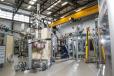
Ion beam analysis techniques
When an energetic ion beam hits a sample it will interact with the atoms through a number of very complex interactions. By detecting and measuring the reaction products resulting from the various interactions and their intensities, you can obtain quantitative data on the sample's constituent elements and their spatial distribution.
ANSTO scientist awarded Nancy Millis Medal for Women in Science by the Australian Academy of Science
One of ANSTO’s most accomplished scientists and internationally recognised energy researchers, Prof Vanessa Peterson, has been awarded the Nancy Millis Medal for Woman in Science by the Australian Academy of Science this week.
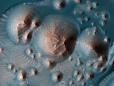
The characterisation of planetary materials
ANSTO provides a range of capabilities using neutrons, X-rays and infrared radiation to study the solids, liquids and gases that might be found in materials in our solar system and beyond.
The characterisation of planetary materials
ANSTO provides a range of capabilities using neutrons, X-rays and infrared radiation to study the solids, liquids and gases that might be found in materials in our solar system and beyond.
ANSTO environmental scientists highlight need to monitor legacy nuclear fallout in Antarctica
ANSTO environmental scientists have alerted the scientific community of the critical need to monitor changes to ice containing potential nuclear fallout that reached Antarctica from 20th century atmospheric weapons testing.
Advanced manufacturing supporting green tech
ANSTO welcomes federal funding announcement to support research infrastructure and expertise
Neutron Reflectometry Instrument Scientist
Role at ANSTO
Australia joins international nuclear research forum

SAXS/WAXS Beamline Scientist
Role at ANSTO
3D cell printing technology earns ANSTO Eureka Prize for Technology
Researchers and industry partners from UNSW Australia, the Australian Centre for Nanomedicine, Children’s Cancer Institute and Inventia Life Sciences Pty Ltd have been awarded the 2021 ANSTO Eureka Prize for Innovative Use of Technology for their method to rapidly-produce 3D cell structures
Japanese scientists collaborate on self-healing ceramics for nuclear reactors
ANSTO researchers have taken up the challenge to develop a coating for the cladding used in nuclear reactors to prevent it from taking up hydrogen and releasing it if temperatures get too high and repair itself if damaged.
New partnership
Australia and Sri Lanks signs new partnership to fight chronic kidney disease.
ANSTO welcomes $13.9M critical minerals funding
Rare earth elements will be a key area of focus for the Australian Nuclear Science and Technology Organisation’s Minerals unit as it welcomes a $13.9 million funding allocation under the Australian Critical Minerals Research and Development Hub