Food labels can get mixed up but atoms don’t lie
ANSTO's unique capabilities are being used to develop a quick analytical tool to determine the geographic origin of seafood and authenticates quality.


Showing 121 - 140 of 250 results
ANSTO's unique capabilities are being used to develop a quick analytical tool to determine the geographic origin of seafood and authenticates quality.
ANSTO has produced a comprehensive report for the NSW Department of Planning and Environment that represents a significant scientific investigation of the connections, pathways and processes of water loss from the Thirlmere Lakes system.

Technology for enclosed spaces recently won global COVID19 NASA hackathon
New class of conducting materials found for potential use in next generation fuel cells and other applications.
ANSTO has supported research led by a University of Sydney team who gained insights into how oil molecules retain their ‘liquid-like’ properties when they are chemically attached as an extremely thin layer to solid surfaces.
Researchers from the Health Research and Technology Group at ANSTO and the University of Wollongong have developed a new device that could improve the quality control of accelerator-based boron neutron capture therapy, a promising radiation therapy for treating aggressive cancers.
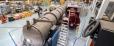
ANSTO’s Lucas Heights campus has an extensive range of specialised facilities and capabilities that are available to assist industry-based professionals in solving problems. Please contact us to discuss how we can assist you. We are open to entering into commercial arrangement with appropriate partners.
An international research collaboration between the University of New South Wales (UNSW), the Shanghai Institute of Applied Physics (SINAP) and ANSTO has provided insights into the performance of advanced material for use in the high-temperature environment of molten salt systems.
A rare collection of traditional Aboriginal wooden objects in varying degrees of preservation found along a dry creek bed in South Australia have been dated to a period spanning 1650 to 1830 at the Centre for Accelerator Science at ANSTO.

A new imaging technology developed at ANSTO makes it possible to image, identify and locate gamma-ray radiation in a safe and timely manner.
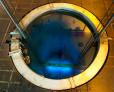
ANSTO operates a range of cobalt-60 gamma irradiators, providing the Australian community with a range of irradiation services for medical, health, industry, agriculture and research purposes.
Radiocarbon dating at ANSTO has supported research that vastly extends the known timeline of the Aboriginal occupation of South Australia’s Riverland region.
International researchers have used nuclear techniques at ANSTO - a centre for food materials science - to develop a methodology that could assist in the design of oleogel systems for food applications.
An unusual and very exciting form of carbon - that can be created by drawing on paper - looks to hold the key to real-time, high throughput DNA sequencing, a technique that would revolutionise medical research and testing.