

Showing 1241 - 1260 of 1659 results
Nuclear techniques reveal ‘tunability' of membranes for enhanced electrical conductivity in graphene
Top students selected to work with Australia's best Nuclear Scientists
This month ANSTO is opening its doors to 11 talented young people from across Australia as the two-year Graduate Program kickstarts.
Instrumentation donated to synchrotron in Jordan
Senior electronics engineer from SESAME visits following donation of instrumentation to the Middle East's synchrotron in Jordan.
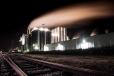
How nuclear energy generation could support clean hydrogen production
Nuclear-based energy generation systems not only provide comparatively low-cost, low-carbon emission electricity but also provide substantial amounts of process heat.
Young medical researchers to meet Nobel giants
ANSTO radiochemist receives national conference award
Australian and New Zealand Society of Nuclear Medicine recognises Nigel Lengkeek
ANSTO celebrates student-science success! 230 medals for 115 primary and secondary schools
IAEA acknowledges Australia’s nuclear expertise and stewardship during visit
ANSTO showcased its significant contribution to security, safety, and public health during a visit of the Director-General of the International Atomic Energy Agency (IAEA) Rafael Grossi, Minister for Industry and Science Ed Husic, Australian Ambassador to Austria Richard Sinclair and Ambassador for Arms Control and Counter-Proliferation Ian Biggs and other dignitaries at the weekend.
Meet our newest Australian Superstars of STEM
Physicist and cancer research Dr Mitra Safavi-Naeini, Macromolecular crystallography beamline scientist Dr Eleanor Campbell and Engineering Support Workshop Manager Bianca Shepherd have been chosen by Science and Technology Australia as the next Superstars of STEM
Glacial study grant includes ANSTO
ANSTO’s unique capabilities in cosmogenic nuclides included in glacial study grant.
Take a fresh look at ANSTO
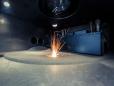
Multiscale modelling of laser-based additive manufacturing for the development of process–structure–property relationships
ANSTO is working with academic and industry partners on the development of multiscale numerical simulations of Laser Metal Deposition (LMD) 3D printing.
Sharing forensic expertise benefits real world event in the Philippines
Training hosted and delivered by ANSTO on behalf of the IAEA assisted the Philippine Nuclear Research Institute (PNRI) to prepare for the successful management of a recent nuclear forensics operation.
Investigating advanced materials for large scale energy storage
New cathode material provides a direction for the design of high performing sodium ion batteries for large scale energy storage
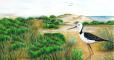
Shorebirds 2024: Flight for Survival
An initiative for National Science Week 2024 the Shorebirds Competition addresses the 2024 theme for National Science Week, ‘Species Survival’ and provides unique cross-curricula learning for Australian primary students in Years 3 to 6.

Project Member
Dr. Micheline Campbell is an early career researcher at UNSW Sydney. Her background is in speleothem palaeoenvironmental research and proxy database development. Dr.

Lead Scientist BioSAXS
Role at ANSTO
Australian led cancer project making an impact at its first regional training course in Malaysia
The Australian led regional cancer care project in medical physics held its first regional training course in Malaysia to progress Rays of Hope.

Publications - Infrared microspectroscopy
Resources and a list of user publications associated with Infrared microspectroscopy.