
General Manager Strategic Research Services and Engagement


Showing 1261 - 1280 of 1508 results

Dr Karina Meredith was appointed Director of the new Research and Technology Group for Environment effective 15 January 2024.
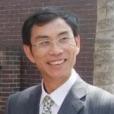
Dr Jian is involved in the study of accelerator optics and ion beam control, Ione beam interaction with different materials, IBA techniques and applications.




The need for a smaller, more transportable version of ANSTO’s 1500-litre atmospheric radon-222 monitor, and with a calibration traceable to the International System of Units, prompted the team to develop a 200-litre radon monitor that would meet those needs.
Professor of Soil Science at The University of Queensland, Peter Kopittke and partner investigator Prof Enzo Lombi of the University of SA are very optimistic about the use of a new synchrotron-based imaging technique that captures in 3D the complex interaction of soil and root.
A large international team led by scientists from the Institute for Superconducting and Electronic Materials at the University of Wollongong has verified that the introduction of novel molecular orbital interactions can improve the structural stability of cathode materials for lithium-ion batteries.
Commitment to undertake health research.
International research led by Monash University and the Peter Doherty Institute for Infection and Immunity has achieved a proof of concept for a new, fast, portable saliva screening test that uses an infrared light technology to confirm infection with SARS-CoV-2.

Resources and a list of user publications associated with Infrared microspectroscopy.
Two early career nuclear scientists who received international scholarships have spent time in the Nuclear Fuel Cycle group at ANSTO are making progress on their work to improve nuclear fuel.
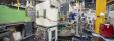
Kowari, a residual stress diffractometer, can be used for ‘strain scanning’ of large engineering components as large as 1000 kilograms.

Taipan is used to study the collective motion of atoms, phonons and magnons in materials, and phase transitions and processes involving thermal energy.
Pioneering work on materials for energy production, such as lithium ion batteries, has made ANSTO a centre of specialist capabilities and expertise.