Advance your high-tech coatings with advanced X-ray vision
ANSTO can give you insights into your coating at microscopic resolution over macroscopic areas


Showing 1281 - 1300 of 1901 results
ANSTO can give you insights into your coating at microscopic resolution over macroscopic areas

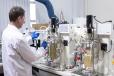
Biodeuteration involves the growth of microorganisms in a heavy water (deuterium oxide) culture medium supplemented with either a deuterated or hydrogenated carbon substrate, depending on the level of deuteration required. The biomass is harvested and the deuterated molecule (e.g. protein) is purified and characterised.
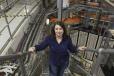
Helen's research interests focus on determining the thermoelastic properties and crystal chemistry of a range of minerals which are of interest in a variety of environmental, planetary geology and industrial settings.


Role at ANSTO
Dr Richard Mole is an instrument scientist co-responsible for the cold-neutron time-of-flight spectrometer PELICAN.


We understand that electrochemistry, electrode design and failure modes of your battery system are going to determine your design and research decisions.
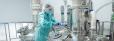
How well do you know the chemical makeup of your product – batch to batch, dose to dose – or even within one pill or capsule?

Explore the many roles that glass plays in our lives, from phone screens to optical fibres in the 2022 hackathon theme of Glass: More Than Meets the Eye

Our people, the custodians of Australia’s nuclear and accelerator expertise, are amongst our nation’s most talented researchers, scientists, engineers and nuclear experts. Everyday we work to respond to the growing nuclear science and technology needs of Australia and the world.
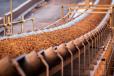
Our world is rapidly transitioning to renewable energy and electric transport systems that require the safe and efficient mining of various metals.

ANSTO's Melbourne location is home to the ANSTO-owned and operated Australian Synchrotron. The Synchrotron is one of the Australia's most significant pieces of scientific infrastructure.