RemLife: the Aussie software behind power station maintenance
Aussie development offering significant benefits to the energy industry.


Showing 1301 - 1320 of 2253 results
Aussie development offering significant benefits to the energy industry.
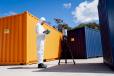
It is critical across many industries to identify and locate sources of radiation accurately and quickly. One of the more challenging aspects of dealing with radiation is that you cannot see it directly, which can result in potential exposure when working in those environments.

You are invited to submit to the various awards from ANSTO and the User Meeting 2026 organising committee.
Technology for enclosed spaces recently won global COVID19 NASA hackathon
The Australian led regional cancer care project in medical physics held its first regional training course in Malaysia to progress Rays of Hope.
Electron and X-ray diffraction techniques provide insights into material damage under stress-strain conditions.
New class of conducting materials found for potential use in next generation fuel cells and other applications.
The newly built Medicines Manufacturing Innovation Centre (MMIC), co-located at the Australian Synchrotron at Clayton, was officially opened on Wednesday by the Victorian Deputy Premier and Minister for Medical Research the Hon Ben Carroll.
ANSTO scientists were members of an inter-disciplinary team led by the University of Sydney, who examined six 19th century West African swords, using a non-invasive multi-methodological approach to reveal the composition and manufacturing history of the iron implements.
ANSTO has supported research that revealed for the first time that marine reptile ichthyosaurs consumed pterosaurs before becoming prey themselves to giant marine predators.
Latest information on the scheduled supply of our nuclear medicine production.
Airbus Australia Pacific has provided students participating in ANSTO’s National Graduate Innovation Forum with a practical challenge relating to technology that is exposed to damaging radiation in space.
New researcher joins human health team to focus on role of acquired immunity in preventing disease
Using the Australian Synchrotron, an international team of researchers has characterised an important interaction that helps the SARS-CoV-2 virus invade human cells.
Evidence of the earliest occupation of the coasts of Australia from Barrow Island, Northwest Australia.
Deuterated rasiotracer subject of poster
A study has provided insight into copper sulfate pentahydrate and could give clues to how other hydrated minerals change under the pressures within planetary environments
The installation of a cold neutron source (CNS), a component that reduces the energy and speed of the neutrons from a research reactor for use in scientific instruments, was successfully completed in September 2024.
A large international team led by scientists from the Institute for Superconducting and Electronic Materials at the University of Wollongong has verified that the introduction of novel molecular orbital interactions can improve the structural stability of cathode materials for lithium-ion batteries.