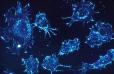
Radiolabelled probes for improved health
ANSTO health researchers have expertise in the development of radioactive probes and imaging techniques.


Showing 1341 - 1360 of 2006 results
ANSTO health researchers have expertise in the development of radioactive probes and imaging techniques.

In 2023 ANSTO produced its 2nd Innovate Reconciliation Action Plan to guide reconciliation actions.
Building a stable tower out of paper and designing a bionic limb were among the challenges of the Discover Engineering day, held on 11 May at ANSTO.
Nanostructure engineered low activation superconductors for fusion energy research.
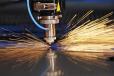
ANSTO infrastructure and capabilities are ideally suited for solving problems relating to the development and characterisation of advanced materials, the engineering of manufactured components and manufacturing processes.

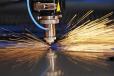
ANSTO infrastructure and capabilities is ideally suited for solving problems relating to the development and characterisation of advanced materials, the engineering of manufactured components and manufacturing processes.
In October, ANSTO released the Independent Safety Review of the ANSTO Health Approach to Occupational Radiation Safety and Operational Procedures.

Project Bright, the construction of eight new beamlines at ANSTO’s Australian Synchrotron has reached a milestone by achieving ‘First Light’ for the new micro-computed tomography (MCT) beamline in late NovembeR.
The new Micro Computed Tomography (MCT) beamline is the first instrument to become operational as part of the $94 million Project BRIGHT program, which will see the completion of eight new beamlines at ANSTO’s Australian Synchrotron.
ANSTO’s OPAL multi-purpose research reactor at Lucas Heights has officially returned to power and recommenced operations, following a months-long planned shutdown to carry out essential maintenance and upgrades.
ANSTO highlighted its food origin research with live shows and an expert panel discussion to showcase Australian science in the Australia Pavilion at the Expo 2025 Osaka from 8-10 October.
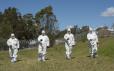
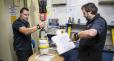
Developed by ANSTO’s predecessor the Australian Atomic Energy Commission (known as the AAEC) in the late 1960s, the Technetium-99m Generator revolutionised nuclear medicine imaging in Australia by enabling imaging procedures to be performed not only in major capital cities but throughout regional and rural Australia.
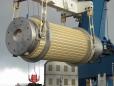
Combining scientific expertise with more than $1.3 billion in unique operational assets to provide optimal radioactive waste solutions.
PNG Fisheries expresses great satisfaction with the progress of aquaculture initiative.
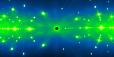
Sample environments, Data analysis and reduction on the Koala instrument.
New research published in the journal Nature Nanotechnology shows that the next generation of lithium-sulphur (Li||S) batteries may be capable of being charged in less than five minutes, instead of several hours as is currently the case.