New round of IAEA Regional Cooperative Agreements projects announced
ANSTO is coordinating and facilitating a new cycle of Australian project proposals for the Regional Cooperative Agreement (RCA).


Showing 1541 - 1560 of 2481 results
ANSTO is coordinating and facilitating a new cycle of Australian project proposals for the Regional Cooperative Agreement (RCA).

Morgan is a graduate at ANSTO. Last year she completed a Bachelor of Physics and Computer Science, and is now working in ANSTO’s Analytics team.

Amelia Iverson is a Community Facilitator with the new VH2 Hydrogen Hub at Swinburne.
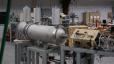
Micro-Particle Induced X-ray Emission (µPIXE) is used to construct elemental maps that show variations of an element's concentration across the sample surface.
Given the importance of water in Australia, surprisingly, there is relatively little information about the past variability of rainfall on this continent. Although there is a good annual record of the past 100 years in Australia, there is nothing much before that period and no known cave deposit records exist for New South Wales.

Samples and techniques on the Far Infrared beamline at the Australian Synchrotron.

Career Statement and Role at ANSTO
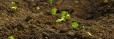
Research to characterise how radioactive contaminants impact the surrounding environment.

Sarah joined ANSTO in May as a part-time Marketing and Events Coordinator for the Nuclear Science and Technology group.
Scientists at ANSTO together with Lithium Australia Limited (LIT) have developed a world-first technology to extract more lithium from lithium mining waste, in a game-changer for Australian lithium industry.
The new Micro Computed Tomography (MCT) beamline is the first instrument to become operational as part of the $94 million Project BRIGHT program, which will see the completion of eight new beamlines at ANSTO’s Australian Synchrotron.
A unique scientific capability comprising a single research platform for high-fidelity simulation, real-time dosimetry, and biological response data is available all from a neutron instrument.
Development of new techniques makes it possible to date Australian Aboriginal rock art.