
Highlights - Cultural Heritage
Over the last decades, neutron, photon, and ion beams have been established as an innovative and attractive investigative approach to characterise cultural-heritage materials.


Showing 161 - 180 of 774 results
Over the last decades, neutron, photon, and ion beams have been established as an innovative and attractive investigative approach to characterise cultural-heritage materials.
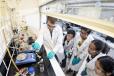
ANSTO Big Ideas encourages students to creatively communicate the work of an Australian scientist, and explain how their work has inspired them to come up with a Big Idea to make our world a better place. This competition is intended to engage and support Australian students in years 7-10 in Science and encourage them to pursue studies and careers in STEM.
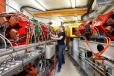
The Accelerator Science group purse a broad research program with the aims of improving the performance and reliability of our accelerators, increasing their research capabilities and developing the next generation of accelerator technology.
ANSTO is interested finding students to collaborate on Generation IV reactor systems.
Study revealed that the chemical forms of sulfur change when land is converted from undisturbed soils to cropping soils and forms of sulfur which bind strongly to the soil mineral particles remains far more stable.
A unique scientific capability comprising a single research platform for high-fidelity simulation, real-time dosimetry, and biological response data is available all from a neutron instrument.
Imaging protocol assesses molecular mechanism of work in the treatment of deadly childhood cancer neuroblastoma.
Lutetium-177 used for advanced prostate cancer

ANSTO's Sydney locations are home to the Open Pool Australian Light-water (OPAL) multi-purpose reactor, the Centre for Accelerator Science (CAS), the Australian Centre for Neutron Scattering, the National Research Cyclotron and the National Deuteration Facility.
Cosmogenic nuclides measurements at ANSTO to be part of large international Antarctic glacier research.

Defence requirements push your technology, we can help. ANSTO is home to some of Australia’s most important landmark research infrastructure – more than $1.3bn of it. Our unique capabilities are used by thousands of Australian researchers from industry and academia every year.
Phase contrast tomography shows great promise in early stages of study and is expected to be tested on first patients by 2020.
A dedicated team of radiation specialists from the Australian Nuclear Science and Technology Organisation (ANSTO) are behind the successful detection and rapid retrieval of a missing radioactive source in outback Western Australia.
Dr Ceri Brenner appointed new leader of the Centre for Accelerator Science
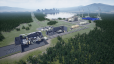
Molten Salt Reactors (MSRs) are nuclear reactors that use a fluid fuel in the form of very hot fluoride or chloride salt rather than the solid fuel used in most reactors. Since the fuel salt is liquid, it can be both the fuel to produce heat and the coolant to transport the heat to a power plant.
Doping with transition metals produced stability in bismuth oxide.

ANSTO's Graduate Program develops the next generation of Australian business and science leaders, by providing the best and brightest postgraduate students with a two-year rotation cycle, tailored to match your talents, goals and interests.