

Showing 161 - 180 of 361 results
Powerful mathematical calculations guide the startup of a nuclear reactor
The nuclear analysis team at ANSTO recently had a significant role in the re-design and optimisation of a cold neutron source facility for the reactor, its installation and the subsequent restart after a six-month shutdown.

Governance
ANSTO is a highly regulated organisation. Our governance system and processes provide critical guidance to effectively manage ANSTO’s activities. This section outlines the processes and systems that are in place to provide assurance to Government, our stakeholders and the community that we are working within our regulated and mandated requirements.
Scientists untangle the challenging complexities of radiocarbon in ice cores
Research elucidates how in situ cosmogenic radiocarbon is produced, retained and lost in the top layer of compacting snow (the ‘firn layer’) and the shallow ice below at an ice accumulation site in Greenland.
Microfluidics: the next wave of disruptive technology in radiochemistry?
Stardust, the sea and an ancient cosmic collision
Debris is still raining down on Earth more than 100 million years after the giant cosmic explosion that created it.
Distinguished lecture: Kimberley rock art
Multi-faceted approach to dating Australian Indigenous rock art from Kimberley region

Airbus Project Summary
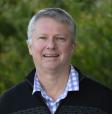
Principal Research Scientist, Project Leader
Role at ANSTO

Next-gen wearable electronic devices
Ultra-flexible electronics has many potential applications within areas such as for example the military, healthcare and energy.
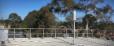
Radiation Monitoring
ANSTO continually monitors environmental gamma radiation from a station located in Engadine NSW. ANSTO uses environmental radiation data to evaluate atmospheric dispersion from its site. This radiation is almost completely natural background radiation.
Fossil provides world-first evidence of ancient marine behaviour in Gondwana
ANSTO has supported research that revealed for the first time that marine reptile ichthyosaurs consumed pterosaurs before becoming prey themselves to giant marine predators.
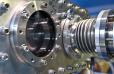
Recoil Time of Flight Spectrometry
Recoil Time of Flight Spectrometry (RTOF) is used to detect a multitude of elements by separating their masses. unambiguously
Executive made Fellow of Institute of Australian Engineers
Con Lyras, Group Executive Capital Programs & Chief Engineer has been made a fellow of the Institute of Engineers Australia.
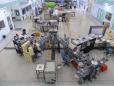
Rutherford Backscattering
Rutherford backscattering primarily provides information about the concentration of elements VS depth in a light material.
Enhancing the science of rivets earns researcher early career award
Dr Rezwanul Haque, now a senior lecturer at the University of the Sunshine Coast, received a national Young Scientist Award for his earlier research using nuclear techniques at ANSTO’s Australian Centre for Neutron Scattering to find cracks and signs of stress in riveted joints in sheet metal in car bodies.
Nuclear techniques measure damage in superconducting cables for fusion energy research reactor
Emerging from the deep: Stawell’s dark matter lab takes shape

Australian access to overseas synchrotrons
The International Synchrotron Access Program (ISAP) is administered by the Australian Synchrotron and is designed to assist Australian-based synchrotron users to access overseas synchrotron related facilities.