Nuclear medicine congress
Congress marks watershed moment for nuclear medicine and ANSTO


Showing 161 - 180 of 223 results
Congress marks watershed moment for nuclear medicine and ANSTO
Participants undertook IAEA training hosted by Macquarie University and ANSTO on use of radionuclides for soil and water investigations.
ANSTO recognises local Indigenous heritage in new mural
New high energy ion microprobe beamline supports space research on the effects of radiation on astronauts.
ANSTO is coordinating and facilitating a new cycle of Australian project proposals for the Regional Cooperative Agreement (RCA).
ANSTO shares expertise on food authenticity research using nuclear techniques with Southeast Asia stakeholders.

The International Synchrotron Access Program (ISAP) is administered by the Australian Synchrotron and is designed to assist Australian-based synchrotron users to access overseas synchrotron related facilities.
A team of Australian scientists have created a new portable device that can pinpoint the exact location of radiation sources, faster and more accurately than ever before.
ANSTO has warmly welcomed the official launch of the Monash Precinct Network by Victorian Member for Ashwood, Matt Fregon MP at a special event at the Australian Synchrotron.
Enhancing safety of trailer trucks among research projects
ANSTO expert in molecular imaging contributed to international workshop.
Research reports for the first time how solid methane and nitrogen expand in response to temperature changes and resolves an historic ambiguity relating to the structure of nitrogen.
Study explored how key proteins manage dietary cholesterol absorption and elucidated crucial transport mechanisms that contribute to cholesterol balance in the body.
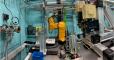
With enhanced submicron spatial resolution, speed and contrast, the Micro-Computed Tomography beamline opens a window on the micron-scale 3D structure of a wide range of samples relevant to many areas of science including life sciences, materials engineering, anthropology, palaeontology and geology. MCT will be able to undertake high-speed and high-throughput studies, as well as provide a range of phase-contrast imaging modalities.