Multiple techniques elucidate hardness with radiation damage
3D models of multilayered structures on engineering scale from nanoscale damage profiles.


Showing 181 - 200 of 394 results
3D models of multilayered structures on engineering scale from nanoscale damage profiles.
Over the past 70 years ANSTO has been building Australia’s nuclear expertise and despite being small in scale, today we are complex and sophisticated nuclear nation.
Today is World Environment Day, a United Nations initiative for encouraging worldwide awareness and action for the environment. This year’s theme is “Beat Air Pollution”, a call to action to combat this global crisis.
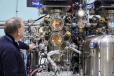
Technical information on the Soft X-ray spectroscopy beamline at the Australian Synchrotron.
ANSTO continues a longstanding, mutually-beneficial research relationship with the University of Wollongong following the signing of a strategic agreement this week.
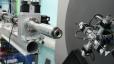
Sample environment types that are available on the Powder Diffraction beamline.

ANSTO provides trusted advice, training and consultancy services to Australia’s resource sector.
Two ANSTO environmental scientists are part of a large team led by the Australian National University (ANU), who have received an Australian Research Council Discovery Project grant to investigate how environmental change and human activities since industrialisation have impacted the transport and deposition of toxic metals on the south coast of Australia, Tasmania, and remote Southern Ocean islands.

We understand that electrochemistry, electrode design and failure modes of your battery system are going to determine your design and research decisions.


ANSTO’s user office in Melbourne offers access to the Australian Synchrotron, a world-class research facility with over 4,000 user visits per year. ANSTO seeks collaboration and partnerships with research organisations, scientific users and commercial users.

ANSTO Synroc technology provides a safe, secure matrix for the immobilisation and final disposal of radioactive waste.
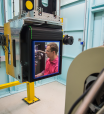
The High Performance Macromolecular Crystallography beamline will enable the study of very small (sub-5 micrometre) or weakly diffracting crystals, providing a state-of-the-art high-throughput facility for researchers. MX3 will be able to study the structures of large proteins and protein complexes for virology, drug design and industrial applications via goniometer mounted crystals, in-tray screening, or via serial crystallography methods.
Virtual activities celebrating the benefits of nuclear science and technology held for National Science Week