

Showing 181 - 200 of 207 results
Using uranium to create order from disorder
The first demonstration of reversible symmetry lowering phase transformation with heating.
Excavation of dark matter lab completed
With all excavation completed and rock removed from the underground site, the physics lab will now be built within the caverns of the Stawell Mines site.

Project Manager for Computing and Electronics
Dr Nick Hauser received his PhD in Physics from the University of Technology Sydney in 1994.
Inaugural particle therapy study tour to Japan
Australian researchers and clinicians have recently returned from Japan where they investigated the use of advanced radiation therapy for cancer using heavy ions at particle therapy facilities on a study tour .
Cosmogenic nuclides help explain stone formation
China’s vertical sandstone pillars studied using nuclear techniques

Imaging Neurophysiologist
Role at ANSTO
Synroc: Australian innovation increases technology readiness for waste treatment plant
Advanced repair technology shows promise for rails in remote locations
The power of deuteration brings insight for mRNA-based drug delivery and vaccines
The National Deuteration Facility is providing deuterated cholesterol, an essential ingredient in lipid nanoparticles for the delivery of vaccines using mRNA, to academic and industry partners.

Group Manager - Scattering
Role at ANSTO

Australian access to overseas synchrotrons
The International Synchrotron Access Program (ISAP) is administered by the Australian Synchrotron and is designed to assist Australian-based synchrotron users to access overseas synchrotron related facilities.

Scientific Operations Group Leader
Role at ANSTO
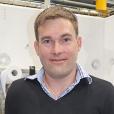
Neutron Reflectometry Instrument Scientist
Role at ANSTO

Deuterated ionic liquids
The physics of producing nanoparticles
Measurement research undertaken to ensure safe, well-engineered nanoparticles
Simulating phase transformations during the welding of ferritic steels
Research investigates low activation and low cost superconducting material for magnetic coils in next generation fusion reactors
New study reveals understanding of a basic physical property of charged particles in microgravity
International study has revealed a clustering of charged particles in the microgravity environment of space,with implications for the development of materials and better drugs that depend on the mixing of two or more charged particles.
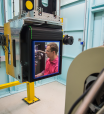
High Performance Macromolecular Crystallography Beamline (MX3)
The High Performance Macromolecular Crystallography beamline will enable the study of very small (sub-5 micrometre) or weakly diffracting crystals, providing a state-of-the-art high-throughput facility for researchers. MX3 will be able to study the structures of large proteins and protein complexes for virology, drug design and industrial applications via goniometer mounted crystals, in-tray screening, or via serial crystallography methods.