Applications - Wombat
Applications, Recent results, publications.


Showing 1881 - 1900 of 2687 results
Applications, Recent results, publications.
A new source added to ANSTO’s cosmogenic toolkit to study past climate and landscape change
ANSTO has collaborated on a study assessing the impact of the commonly-used food additive titanium dioxide (TiO2) on gut microbiota and inflammation.
A team of Melbourne researchers and international partners from Italian Instituto Nazionale de Fisica Nucleare (INFN) and CERN, who are developing radiation-hardened semiconductor chips, used the unique state-of-art high energy ion microprobe on the SIRIUS ion accelerator at ANSTO’s Centre for Accelerator Science to test a prototype radiation-resistant computer chip
Two Australian scientists have been appointed to assist with the development of a $500 million-dollar synchrotron facility in Mexico, the first and largest project of its kind.
ANSTO has contributed to work by scientists from the Tokyo Institute of Technology on a promising proton conductor for next-generation ceramic fuel cells.
ANSTO today welcomed a significant Federal Government funding allocation to further safeguard the production of life-saving nuclear medicines in Australia.
Research undertaken to understand ancient record of algal blooms
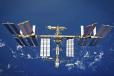
In space, without the protection of the magnetosphere, the type and dose of radiation is considerably different to what is naturally experienced on earth. However, it is the secondary particles of lower energies created when galactic and cosmic radiation interacts with shielding that is of concern for astronauts.
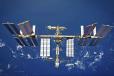
In collaboration with the French National Institute of Health and Medical Research (INSERM) and the French International Space Agency (CNES), ANSTO scientists are undertaking research on the radiobiological effects of secondary particles that are created when radiation interacts with the shielding on the International Space Station.
International collaboration uses cryo-electron tomography to determine the structure of a complex responsible for sorting and delivering cellular cargo.
ANSTO can confirm it has completed its 9th successful export of spent fuel. The spent fuel, from OPAL, ANSTO’s multipurpose reactor, has gone to France for reprocessing.
The Australian Nuclear Medicine Traceability Program (ANMTP) assists practices administering nuclear medicine-based radionuclides to achieve regulatory compliance by providing measurement traceability to the Australian Standard.
This annotated flow diagram explains the production of Molybdenum-99 at ANSTO and its delivery to patients as Technetium-99m

This guide covers concepts such as interaction of light and energy, nuclear physics, and radioactivity through the workings and applications of the Australian Synchrotron